If you’re planning to dig anywhere on your property — whether you’re installing a fence, planting a tree or tackling a landscaping project — knowing what’s buried beneath your yard and how far down it is matters a lot.
Hitting a water or sewer line with a shovel is the kind of mistake that turns a simple weekend project into an expensive emergency. Here’s what you need to know about typical plumbing burial depths, and why they vary so much depending on where you live.
The Short Answer
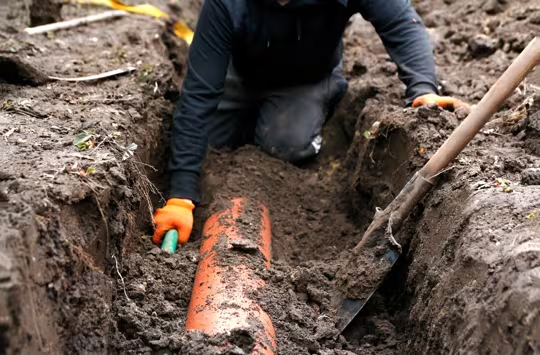
Water lines are generally buried between 18 inches and 6 feet deep, depending on the climate. Sewer lines typically run deeper — anywhere from 18 inches to 6 feet or more — though they tend to get deeper the further the line runs from the house, since they rely on gravity to move wastewater toward the municipal connection or septic system.
The single biggest factor in both cases is the frost line — the depth to which the ground freezes in winter. Water in a frozen pipe expands, and expanding water breaks pipes. In areas where the ground freezes, water lines have to be buried below the frost line to stay protected. Sewer lines are less vulnerable to freezing because wastewater is warm and moving, but they still benefit from deeper burial in colder climates.
Frost Depth Varies By State
Midwest (Northern States)
This is where frost line depths get serious. In states like Minnesota and North Dakota, the frost line can reach five to seven feet or deeper in particularly harsh winters. Water lines in these states are typically buried 5 to 6 feet down, sometimes more. Sewer lines follow a similar pattern. If you live in the northern Midwest and you’re planning to dig, assume there’s a lot of material between you and your utility lines.
Northeast
Frost depths in the Northeast vary considerably from southern Connecticut to northern Maine. In southern New England, frost lines typically reach three to four feet. In northern states like Vermont, New Hampshire, and upstate New York, that extends to four to five feet. Water lines are buried accordingly, and sewer lines generally run at similar or greater depths.
South (Warmest States)
Warm climates change the calculation dramatically. In Florida, where the ground essentially never freezes, water lines are often buried as shallow as 12 to 18 inches. Texas varies more — southern Texas has minimal frost concerns, while the northern part of the state can see occasional hard freezes and accordingly deeper burial depths. Across most of the South, you’ll find water lines at 18 to 24 inches, and sewer lines at similar or slightly greater depths. The comparatively shallow burial in warm climates is precisely why a rare hard freeze can cause widespread pipe damage in states like Texas that aren’t built for it.
Northwest
The Pacific Northwest is milder than its northern latitude might suggest, thanks to the moderating influence of the Pacific. In coastal areas of Washington and Oregon, frost lines are relatively shallow — often just 12 to 24 inches — and water lines are buried accordingly. Move inland toward eastern Washington or Oregon, where temperatures drop considerably more, and burial depths increase to three feet or more.
Southwest
Much of the Southwest — Arizona, Nevada, New Mexico, southern California — has minimal frost concerns, and water lines in these areas are often buried at 18 inches or less. At higher elevations in states like New Mexico and Colorado, frost becomes a real factor. Depths increase accordingly, sometimes reaching 3 to 4 feet.
Know Water and Sewer Line Depth Before You Dig
Knowing approximate regional depths is useful, but it’s not a substitute for knowing exactly what’s in your specific yard before you start digging. Call 811 — the national “Call Before You Dig” service — at least a few business days before any excavation project. It’s free, it’s required by law in most states, and utility companies will come out and mark the locations of buried lines on your property. The markings tell you where the lines are horizontally, though they won’t tell you exactly how deep. For anything more than shallow digging, a plumber or excavation contractor can help you determine the actual depth before specialized tools and shovels start breaking ground.
Drain snakes, also known as drain augers, can be a handy tool for dislodging stubborn clogs. But they’re not a one-size-fits-all solution. In some cases, using a drain snake can actually cause more harm than good. Whether you’re dealing with fragile pipes, sensitive fixtures or clogs caused by something a snake won’t reach, it’s important to know when not to reach for this tool.
If your plumbing system is older, particularly if it’s made from brittle materials (like clay, galvanized steel or thin copper), a drain snake can puncture or collapse the pipe. Forceful use of a metal auger can scrape the inside of deteriorating pipes, accelerating their breakdown. Instead, use a non-invasive method like a pressurized water bladder attached to a garden hose or call a plumber for a camera inspection and potential hydro jetting. If the clog is minor, enzymatic drain cleaners may help dissolve organic matter without physical abrasion.
2. There’s a Risk of Porcelain Damage
Snaking through toilets or bathroom sinks with metal augers can scratch or chip porcelain. This is especially problematic in toilets, where scratches on the bowl can harbor bacteria and cause aesthetic damage. For toilet clogs, use a flange plunger designed to form a tight seal at the base of the bowl. If that fails, use a toilet auger, which is a type of snake with a protective rubber sleeve and curved guide tube to prevent scratching. For sinks, try a plastic barbed hair remover or a gentle suction device.
3. The Clog Is Caused by Non-Organic Material
Drain snakes work best on soft, organic clogs (like hair or grease). If your blockage is caused by items like dental floss, toys, hardened soap or mineral deposits, a snake may either miss the obstruction or push it further down, worsening the clog. Instead of using a drain snake, disassemble the P-trap beneath your sink to manually remove the obstruction. In deeper cases, professional hydro jetting or pipe descaling may be necessary.
4. You’ve Already Used Chemical Drain Cleaners
Chemical cleaners can linger in the pipes and splash back when using a snake, posing a serious chemical burn hazard. The heat generated by caustic agents like lye can also weaken plastic piping, increasing the risk of structural damage when snaking. If you’ve already added chemical cleaner, flush thoroughly with water and wait at least 24 hours before attempting anything else. If the drain remains clogged, call a plumber who can safely remove the blockage.
5. The Drain Is Completely Blocked with Standing Water
While snakes are meant to clear clogs, they can have trouble when faced with full drainpipe backups. The water makes it difficult to tell where the clog begins, and forcing a snake through without visual confirmation can compact the clog further. To resolve this situation, start by bailing out the water using a small cup or bucket. Then try a plunger with a tight seal or a wet/dry vacuum on reverse to pull the clog out.
6. The Drain Serves a Garbage Disposal
Garbage disposals contain blades and mechanical components that can be damaged by a snake, and damage the snake itself. Instead of a snake, disconnect the disposal unit and access the clog from the adjacent drain line, or check the reset switch. In some cases, clogs can be resolved by flushing with hot water and dish soap.
7. You’re Not Sure What’s Down There
Guessing the source of a clog can be risky – especially when deeper, more serious problems could be lurking. Issues like tree roots, collapsed or misaligned pipes or non-organic blockages (like construction debris) are not something you want to discover with a metal auger.
A metal snake isn’t just ineffective against these types of obstructions. It can make things worse. For example, hitting tree roots with a snake won’t clear them, but it can get tangled in them and make removal difficult or impossible without professional tools. If the pipe is collapsed, forcing a snake through it may jam the auger inside the damaged area or worsen the break, leading to more extensive repair costs. In some cases, the snake may even break off inside the pipe, creating an even larger obstruction.
If you’re not certain what’s causing the clog (especially if multiple drains are slow, backing up or inconsistent), call a plumber for a camera inspection before attempting any mechanical tools. This will help you pinpoint the issue without making it worse.
8. The Clog is in a Shower Drain Lined with Tile or Delicate Finishes
Snakes can scratch delicate tile or damage decorative drain covers. Aggressive snaking can also shift seals in shower pans. Try a flexible plastic drain cleaning tool or a natural solution of hot water, baking soda and vinegar instead. For persistent clogs, a plumber can use a non-damaging vacuum or mini hydro-jet.
9. The Blockage is in a Vent Stack
A vent stack is a vertical pipe that runs up through your home and exits through the roof. It allows air to enter the plumbing system, which maintains proper pressure and enables wastewater to flow smoothly through the drainpipes. It doesn’t carry water, only air and sewer gases.
Symptoms of a vent stack blockage include gurgling drains, slow drainage across multiple fixtures, water backing up in one fixture when another is used (e.g., toilet bubbling when the washing machine drains) and sewer smells in the house. These issues suggest airflow is restricted, preventing proper pressure regulation in the pipes.
Vent stacks usually exit through the roof, and clogs (like leaves, bird nests or ice) don’t respond well to snaking from below. Forcing a snake upward can damage fittings or push debris deeper, compounding the issue.
Use a shop vac from the rooftop (only if it’s safe to access) to try to pull the obstruction out. If the issue persists, call a professional who can safely access the vent and use appropriate tools, like blow bags or inspection scopes.
When to Call a Plumber
If you’ve tried basic home remedies and still have a clog or you’re not sure what you’re dealing with, it’s best to call a plumber. Professionals can use scoped cameras, targeted jetting and safe mechanical devices to fix clogs without damaging your pipes.
If you’ve got a tankless water heater and you’ve ever been standing in the shower when the water suddenly turns cold for a few seconds — then goes right back to hot, as if nothing happened — you’ve experienced what plumbers call a “cold water sandwich.” It’s a real, well-documented quirk of tankless systems, and understanding why it happens is the first step to stopping it.
The name describes exactly what it feels like: a layer of cold water sandwiched between two layers of hot. You turn on the shower, hot water arrives, you’re comfortable — and then, without touching anything, a brief blast of cold water interrupts the flow before it returns to hot again on its own.
It’s most commonly reported when someone turns the hot water on, off and back on again within a short window — for example, someone showers, steps out briefly and steps back in, or two people use hot water fixtures back to back in different parts of the house. It can also happen on the very first draw of hot water after the system has been idle.
Why Your Tankless Water Heater Goes Cold After a Few Minutes
To understand the cold water sandwich, it helps to know how a tankless water heater actually works. Unlike a tank system that keeps a reservoir of hot water always ready, a tankless unit heats water on demand as it flows through a heat exchanger. A flow sensor inside the unit detects when water starts moving through the pipes and triggers the heating element or gas burner to fire up.
Here’s where the sandwich comes from. When you first turn on a hot water tap, there’s a brief lag between when water starts flowing and when the heater actually ignites and starts heating it — the water sitting in the pipe from the last use, plus whatever cold water was sitting in the line, passes through before the newly heated water catches up. If the tap is turned off and back on again quickly, that same sequence repeats: a slug of lukewarm or cold water that was sitting in the line — left over from the brief pause — gets pushed through before the heater catches back up and hot water resumes.
Every tankless heater also has a minimum activation rate — a minimum flow rate required to trigger the unit to fire up at all. If water flow briefly drops below that threshold — which can happen when another fixture in the house turns on or off and changes the pressure dynamics in the system — the heater can shut off momentarily and then need to re-ignite, creating the same cold gap in the meantime.
A few approaches can reduce or eliminate the cold water sandwich, depending on how much you’re willing to invest in the fix.
Install a Recirculation Pump
This is the most effective solution for homes that experience this regularly. A recirculation pump continuously circulates a small amount of hot water through the pipes, keeping the line primed with hot water even when no fixture is actively running. This eliminates the cold slug that would otherwise sit in the pipe waiting to be pushed out. Many tankless systems support recirculation pumps as an add-on, and some models come with one built in.
Add a Small Buffer Tank
Some homeowners pair their tankless system with a small buffer tank — essentially a compromise between a traditional tank heater and a fully tankless system. The buffer tank holds a small reserve of hot water that smooths out the gap while the tankless unit catches up to demand, largely eliminating the cold water sandwich effect.
Avoid Quick On-Off-On
This isn’t a permanent fix, but knowing the cause helps in the moment. If you know turning the water off and back on quickly triggers the issue, giving it a few extra seconds before turning it back on can sometimes help the system catch up more smoothly.
Check Your Minimum Flow Rate
If the cold water sandwich happens frequently and isn’t related to quick on-off cycling, it may be worth having a plumber check whether your fixtures are delivering enough flow to reliably trigger the heater. Low-flow showerheads, in particular, can sometimes sit right at the edge of a unit’s minimum activation threshold.
A sluggish sink, bathtub or shower drain might seem like a minor inconvenience — something you can live with or hope will resolve on its own. But like most plumbing issues, a slow drain is your home’s way of raising a red flag.
Ignoring it could let a small, manageable problem become something more costly and disruptive. Read on to learn what causes a slow drain, why it shouldn’t be ignored and how to fix it before it turns into a serious plumbing issue.
What Happens If You Ignore a Slow Drain?
At first, a slow drain might just mean the water takes a few extra seconds to disappear. No big deal, right? But under the surface, ignoring that slowdown can trigger a chain reaction.
Blockages tend to worsen over time as soap scum, hair, grease and other debris accumulate. Eventually, what starts as a mild nuisance can become a full stoppage, leaving you with a sink or tub that won’t drain at all. When water has nowhere to go, it backs up. And that can lead to overflows, water damage and even mold growth in hidden areas.
Beyond the visible mess, slow-moving drains increase wear and tear on your plumbing. Stagnant water stresses pipes, may accelerate corrosion and can encourage mineral deposits to form. And if that water sits long enough, unpleasant odors and bacteria aren’t far behind.
Is a Slow Drain a Sign of a Bigger Problem?
Sometimes a slow drain is exactly what it seems: a localized clog caused by hair, soap residue or grease. But when the issue lingers, or affects multiple drains, it may point to something deeper within your plumbing system.
Here are a few larger problems a slow drain could be indicating:
Partial blockages deep in the line: These often don’t respond to surface-level fixes like plunging, and repeated backups may signal that your pipes are progressively narrowing from within.
Clogged vent pipes: A blocked vent can prevent proper drainage even if the pipe itself is clear. If you’re hearing gurgling noises from the drain, this may be the culprit.
Sewer line obstructions: Tree roots, debris buildup or pipe collapse in your main sewer line can slow every drain in the house, and foul odors are often the first noticeable sign.
Aging or poorly sloped plumbing: Corrosion, mineral scale or incorrect pipe angles can restrict flow and increase clog risk. When multiple fixtures begin acting up, your drainage system may be failing from the inside out.
What’s the Best Way to Unclog a Slow Drain?
The best solution depends on what’s causing the blockage and how deep it goes. For minor, surface-level clogs, several home remedies can be surprisingly effective if done correctly.
Hot Water Flush (Best for Kitchen Grease Clogs)
Hot water can help melt or dissolve congealed cooking fats and soap residue that have stuck to the sides of your drainpipes.
1. Heat a large pot of water until it’s steaming hot. Don’t allow it to boil, as that can damage PVC pipes.
2. Slowly pour the hot water directly into the drain in stages, allowing it to sit and work for 30 seconds to 1 minute between each pour.
3. Repeat the process two or three times to clear light grease buildup.
Baking Soda and Vinegar Reaction (Best for Clogged Bathroom Sink or Shower Drains)
This safe and chemical-free combo creates a fizzy reaction that can help loosen minor hair clogs and soap scum.
1. Pour about 1/2 cup of baking soda into the dry drain.
2. Follow it immediately with 1 cup of white vinegar.
3. Cover the drain with a plug or cloth to contain the reaction.
4. Let it sit for 15 to 30 minutes, then flush with hot (not boiling) water.
A standard cup plunger can create enough pressure to dislodge soft blockages in sinks and tubs.
1. Fill the sink or tub with enough water to cover the bottom of the plunger.
2. Position the plunger directly over the drain, forming a tight seal.
3. Plunge vigorously for 10 to 20 firm pumps while keeping the seal intact.
4. Quickly pull up the plunger and check water flow. Repeat as needed.
Manual Drain Snake (Best for Hair and Soap Gunk Within Reach)
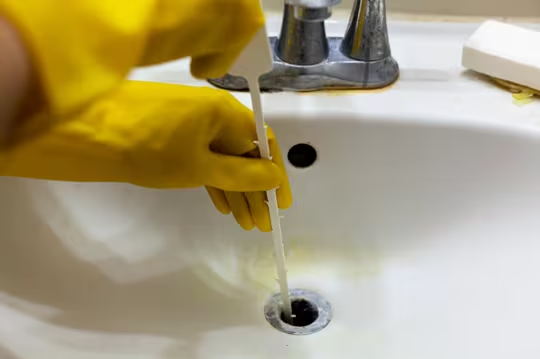
A hand-cranked auger or even a plastic hair-snagging tool can be fed into the drain to physically break up or pull out clogs.
1. Insert the tool gently into the drain until resistance is felt.
2. Rotate (or wiggle, for plastic tools) to latch onto the clog.
3. Pull the clog back out slowly and discard it. Don’t push it farther down.
4. Flush the drain with hot water to clear residual debris.
Each method addresses different types of surface-level buildup. If none of them restore full drainage, or if the problem returns within days, the blockage is likely deeper and requires professional tools or inspection.
How Can You Prevent Slow Drains?
Take the following actions to prevent slow drains from occurring in the first place:
Use mesh drain strainers in sinks and tubs to catch hair, soap chunks and food scraps.
Never pour grease down the sink. Let it cool in a container and throw it in the trash.
Run hot water down drains after each use, especially in kitchens where oils and soap residues can congeal.
Flush with boiling water weekly to clear lingering residue before it sticks.
Keep an eye out for early signs like gurgling, minor bubbling or slowing water flow.
While it might seem silly to hire an HVAC technician to perform regular HVAC tune-ups, that service could save you a lot of money and stress in the long run.
What Are the Benefits of Properly Maintaining Your HVAC System?
When your budget is already tight, and your schedule is busy, it might be tempting to skip HVAC maintenance. But it could help you keep your system running better and save you money. You can perform some maintenance tasks, such as changing the filter and cleaning the unit, but it’s also important to schedule annual tune-ups with a professional HVAC technician. Here’s why.
1. Improved System Efficiency
When you don’t take care of your heating and cooling equipment, it has to work a lot harder to keep your home comfortable. This can happen if the parts inside get dirty and can’t work as well or if parts start to wear out and interfere with operations. When an HVAC pro performs a tune-up, they clean out the system and lubricate moving parts, so they can glide easily with less wear. If they find minor issues that are affecting efficiency, they can fix them to restore peak efficiency.
2. Lower Utility Bills
Using less energy to heat and cool your home is great for the environment, but it’s also a nice bonus for your bank account. When your equipment works efficiently, you’ll pay less for your utilities. Keeping an eye on your power bills can help you monitor the health of your HVAC equipment. If you notice your bills increasing, it could mean it’s working harder than it should due to a hidden issue.
3. Fewer Repair Calls
Sure, you have to pay for a tune-up — you can expect to pay around $170 (CAD 226) for HVAC maintenance costs. But it could save you on more costly repairs in the future. Taking care of the system can prevent excess wear and damage to parts, which can help you avoid lots of repairs. For example, a dirty air filter can reduce airflow, make the system work harder and damage parts.
The repairs that result from lack of maintenance can be expensive. For instance, leak repair can range from $300 to $1,000 (CAD 398 to CAD 1,328). Replacement condenser coils usually cost between $500 and $750 (CAD 663 and CAD 996). Maintenance might not prevent all repairs, but it can reduce your risks of more expensive repair services.
4. Longer Life
Just like a well-maintained car usually carries you through a lot more road trips, maintaining your heating and cooling system helps it last longer. Tune-ups reduce the strain on your system by helping it work optimally. Less strain means the internal parts should hold out longer. That means you can hold on to your equipment a little longer before you have to invest a lot of money into a new unit.
If you have a newer HVAC system, tune-ups might not be optional if you want to keep your warranty coverage. Many manufacturers require you to get annual checkups from a professional HVAC technician to keep the warranty in effect. Since it’s a good way to prevent issues, the manufacturer does this as a way to minimize potential repairs.
6. Improved Safety
During an HVAC tune-up, a series of safety checks are performed to make sure everything is working correctly. Issues with the equipment can cause carbon monoxide leaks, gas leaks or electrical fires, which can all be potentially deadly. An HVAC technician checks for situations that could cause those safety risks and provides repair solutions to keep your home and family safe.
7. Better Indoor Air Quality
All the air in your home circulates through your HVAC system. Keeping the equipment in good working order can help you breathe a little easier with healthier indoor air. When the system works correctly, it pulls dirt, pet dander and other contaminants from the air with the air filter. It also helps control humidity in your home, which contributes to comfort and prevents mold buildup.
All CAD conversions are based on the exchange rate on the date of publication.
While most people know that fall and raking go hand-in-hand, most homeowners are unaware of the multitude of home maintenance tasks that should be done during this season. Ignoring some of these tasks is relatively harmless, but neglecting others can leave your home exposed to serious damage over the harsh winter months.
To keep that from happening to you, follow this fall home maintenance checklist to get your home ready for winter — inside and out.
Outdoor Fall Maintenance Tasks
Clean Your Gutters and Downspouts
Gutters and downspouts play a key role in protecting your doors, windows, siding and foundation from water damage. Cleaning them in the fall — after most of the leaves have fallen from the surrounding trees — is essential for protecting your home over the winter.
You can either clean your gutters from the roof or the ground. Using a ladder to climb up to the roof and manually removing leaves and other foreign matter is the most common method, but it’s also the most labor-intensive, time-consuming and dangerous. That being said, there are several types of gutter scoops available that can make the job easier.
A quicker and safer method is to clean your gutters from the ground using a gutter cleaning attachment on a pressure washer. If you don’t own a pressure washer yourself, you can rent one from many rental and home improvement companies, or borrow one.
Along with the gutters, check the downspouts for any obstructions that can restrict the flow of water from exiting the drain. If they’re clogged, you can usually insert the tip of a plumber’s snake into the bottom opening of the downspout and clear the obstruction like you would a regular drain.
Check Your Roof
The roof is your home’s first line of defense against interior water damage, so ensuring it’s in good condition before winter can spare you from expensive roof repairs down the road. If you’re cleaning your gutters from the roof, that’s an excellent time to inspect the condition of your roof as well. Otherwise, you can use a pair of binoculars to inspect your roof from afar. In either case, check your roof for:
Cracked, damaged or missing shingles — especially on the ridge
Shingles with moss and algae buildup, which may indicate underlying water damage
Rusty, warped, loose or missing flashing
Cracked, loose or missing rubber collars (AKA boots) around roof vents.
These issues should be repaired by a qualified professional as soon as possible. If you’re in doubt about the condition of your roof, it’s wise to hire a professional inspector.
Minimize Mold Risk on Your Lawn
Leaving a thick bed of fallen leaves through the winter months leaves it susceptible to a fungus called “snow mold” that causes discolored patches of grass in the affected area. As a result, thick sections of leaves should be removed from your lawn with a rake or leaf blower prior to heavy rain or snow. However, keeping a thin layer of leaves on your lawn will provide a beneficial layer of mulch, which will naturally fertilize the lawn as the leaves decompose.
Mowing your grass down to 1 1/2 to 2 inches (4 to 5 centimeters) can also combat snow mold, and mowing over leaves will help promote decomposition.
Treat Your Lawn: Aerate and Fertilize
Three weeks after your last mowing for the year, aerating and fertilizing your lawn will help keep it healthy — and in some cases, alive — through winter. Aerating is the process of puncturing holes into, or removing plugs from, your lawn. Doing so helps relieve soil compaction and allows for more air, water and nutrients to enter the soil. Aerating can either be performed manually with a number of aerating tools, or mechanically with an aerator that is often operated like a conventional lawnmower. Mechanical aerators can be rented from a number of machine rental and home improvement companies.
Immediately after aerating, apply a fall fertilizer to give your lawn an extra boost.
Prune Your Trees
Late fall is the ideal time to prune, for the health of the trees and the safety of your home. Tree limbs should ideally be cut 3 feet (1 meter) away from your house — especially if they’re hanging above the roof. Overhanging limbs can accumulate moisture that will drip onto the roof and siding, placing both at heightened risk for moisture damage. They can also cause catastrophic damage to your home if they break off and land on your roof. If the limbs can’t be fully removed, the deadwood should be removed from overhanging limbs at a minimum.
Consider hiring a professional arborist to trim your trees if you’re not experienced or equipped to do so yourself.
Winterize Your Water Lines
Standing water in outdoor water lines (above-ground spigots and underground irrigation lines) can freeze and cause them to rupture when temperatures drop. To combat this, they should either be fully drained or properly insulated.
Start by closing the shut-off valves that service your outdoor water lines. Once the water is off, open the valves on your above-ground spigots to drain residual water pressure from the lines. If you don’t have a designated shut-off valve that controls your outdoor spigots, wrap the pipes with pipe insulation. Drain any garden hoses that were connected to the spigots and bring them indoors for storage.
Below-ground irrigation systems should have their controller shut off and their lines drained. The exact shut-off and drainage procedure will vary between manufacturers, so you should either consult with the manual provided with your system or call an irrigation professional. If your irrigation system doesn’t have integrated drain valves, you may need to hire a pro to blow out the lines with compressed air.
Your home’s central heating system should be inspected and serviced annually by a qualified professional. If your home has a central HVAC system — combining heating and air conditioning — you may have already serviced your system as a part of your summer maintenance. If you didn’t get around to it, or if your home has a central heating boiler system, fall’s the perfect time to have your system professionally checked.
You can perform the following tasks yourself:
Install a new furnace filter
Release trapped air from (bleed) your hot water radiators
Clean out clogged air vents on your steam radiators
Service Your Chimney
Your chimney should be cleaned after every 50 to 70 burns, or every 1 to 2 years. Over time, your chimney accumulates a compound called creosote that’s a major contributor to devastating chimney fires. A professional chimney cleaner will remove the creosote buildup from your chimney and inspect it for other potentially harmful elements, like a cracked liner or foreign material obstructions.
Store or Cover Your Window AC Unit
The exterior portion of window AC units can become damaged from excessive exposure to rain, snow and freezing temperatures. Protect your window AC unit from winter damage by removing it from the window and storing it indoors, or by covering the exposed portion. Window AC covers are available in a variety of sizes, so it’s important to take accurate measurements of your unit to order a cover with the proper dimensions.
Seal Gaps
Gaps between windows and doors are a primary contributor to heat loss, and large enough gaps can let rodents and insects into your home. Sealing gaps will keep unwanted critters out, and can slash up to 20% off your winter heating bill, according to the U.S. Department of Energy.
Start by visually inspecting around windows and doors for visible gaps or evidence of damaged caulking and weatherstripping. To locate gaps not visible to the naked eye, you can hold a stick of incense up to your windows and doors to see if any smoke gets sucked or blown outside. That indicates an air leak.
Weatherstripping can be installed around window and door frames, and you can apply caulk around trim, jambs and penetrations from plumbing, electrical or gas lines. Large gaps that can’t be caulked can be filled with insulating foam sealant.
Inspect Safety Devices
Your home’s safety devices — smoke alarms, carbon monoxide detectors and fire extinguishers — should be inspected and serviced annually. Giving them once-over in the fall can also be valuable, especially if you have a wood-burning fireplace.
Here’s what to do:
Replace the batteries in each one of your smoke alarms and carbon monoxide detectors.
Use the “test” feature on each smoke alarm and carbon monoxide detector to verify they’re working properly.
Check the pressure gauge on each of your fire extinguishers to ensure they’re fully charged.
Check the purchase or manufacture date on each fire extinguisher, and replace any that are over six years old.
Change Your Ceiling Fan Direction
Over the winter, the blades on your ceiling fan should rotate clockwise to push the hot air collected near the ceiling towards the ground. Most ceiling fans have a switch on the side of the housing that controls the direction of the blades. If the switch on your fan is set to a counterclockwise rotation, switch it over to clockwise while the fan is off.
Prepare Equipment for Winter
Mechanical equipment that sits for long periods of time can develop start-up or running issues if it isn’t properly stored. Winterize mechanical lawn care equipment like lawnmowers, leaf blowers and chainsaws by draining their fuel tanks or adding a fuel stabilizer. You may also consider replacing the oil or having your equipment professionally serviced.
If you own a snowblower or similar equipment, make sure they’re in working order before the snow begins to fall. If they weren’t properly stored, they may have start-up or running issues, like a clogged carburetor or filter. Fall’s a great time to have your snow equipment professionally serviced to ensure it’ll remain operational all winter long.
If you’ve lived in your home for more than a couple of months, you’ve probably dealt with at least a minor plumbing issue. Clogged drains or toilets or dripping faucets are examples of plumbing problems most people have experienced.
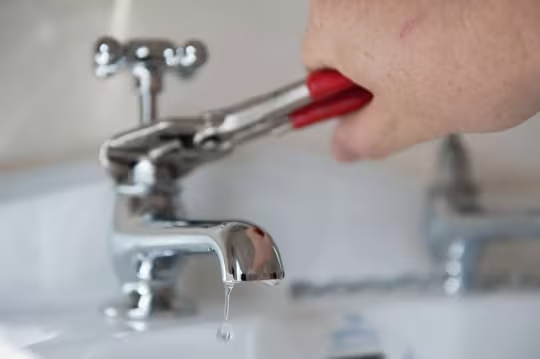
Dripping faucets allow water through even when you’ve turned them off. A slow dripping faucet can be annoying and, over time, increases how much water you use.
Common Signs of a Plumbing Issue With a Dripping Faucet
Consistent, slow drops of water from the faucet even if you turn it off all the way
Pooling water below the faucet
Mineral deposits around the faucet
Dripping sounds from the bathroom or kitchen
How to Fix a Dripping Faucet
Worn O-rings and washers can cause this plumbing problem, as can loose or worn faucets. To fix the issue, turn the water off to the area in question. Replace the entire faucet or worn parts.
Clogged Toilets
Clogged toilets are one of the most common plumbing issues. They occur when waste builds up or gets stuck in drain lines or the trap.
Common Signs of a Clogged Toilet
The toilet overflows
The water and waste don’t clear the toilet when you flush
Water rises to an above-normal level after flushing
How to Fix a Clogged Toilet
Most toilet clogs are minor plumbing issues you can easily resolve with basic DIY measures like using a plunger. You may be able to clear more stubborn clogs with a toilet auger, which can reach down into the trap to break up debris. More serious clogs or recurrent clogs may require professional plumbing resolutions.
Low Water Pressure
When water flows from your faucets with less force than you’re used to, it makes for a less-than-satisfying shower. Low water pressure can also reduce the effectiveness of cleaning and appliances.
Troubleshooting Low Water Pressure
Weak or slow flow from any faucet or showerhead, even when you turn it on all the way
It takes longer than normal to fill a sink, tub or pot with water
Water pressure goes up and down, especially when other taps are open
How to Fix This Low Water Pressure
If water pressure is a problem at a single location, check that the faucet or showerhead isn’t clogged or dirty. Swap out the aerator or washers if needed. If you have low flow through your entire home, consider getting a plumber to assess your system to make recommendations.
Leaking Pipes
Your sink pipe leaking or a leaking toilet pipe means water is flowing out of your system at an inappropriate location. Leaks can range from a slow seep to a major burst, but in all cases, they can cause water damage and mold in your home.
Common Signs of Leaky Pipes
Water stains on ceilings, floors or walls, especially when they appear suddenly or get bigger
Mold, mildew or smells of either
Persistent moisture around pipes
An unexplained spike in your water bill
How to Fix a Leaking Pipe
If you find a leak in an exposed pipe, consider where the damage is and how extensive it is. Many homeowners can make basic pipe repairs, such as replacing a joint or section of pipe, on their own. For more extensive issues or when leaks are behind walls, consider calling professional plumbers.
Clogged Drains
Clogged drains occur when debris within the drain pipes slow or completely impede the flow of water out of sinks or tubs.
Common Signs of a Clogged Drain
Water drains slower than normal
You hear gurgling sounds from the drain
Water backs up into a nearby fixture, such as a dishwasher
You smell unpleasant odors near the drain
How to Fix a Clogged Drain
Drain snakes can help you clear bathroom drains, where hair and soap buildup can create blockages. Pouring boiling water down drains may also help reduce grease or soap buildup. Avoid using chemical drain cleaners often, as they can damage your plumbing system. For stubborn drain clogs, call in a professional for help.
A running toilet occurs when water continues to run into the bowl after the flush cycle should be complete. When water is constantly running through a toilet, it can create a lot of waste and lead to a much higher water bill.
Common Signs of a Running Toilet
The sounds of water trickling in your bathroom
Phantom flushing, which occurs when your toilet seems to flush on its own
An unexpectedly high water bill
How to Fix a Running Toilet
Check to see if your flapper needs to be replaced. Place a few drops of food coloring in the tank; don’t flush the toilet and wait around 15-20 minutes. If food coloring leaks into the bowl, it’s a good sign you need to replace the flapper. Next, check whether your fill valve is working. These are both fairly easy to replace, and if neither is the culprit, it may be time to call a plumber.
Not Enough Hot Water
If you don’t have enough hot water for your household’s demands, it could be a plumber problem or a logistics issue.
Common Signs of Water Heater Issues
Hot water runs out faster than it used to
Water doesn’t get hot enough, even when you run only hot water
You have to wait a long time for hot water between uses
Water temperature is inconsistent when you take a shower
How You Can Fix a Lack of Hot Water
First, check whether the temperature on your water heater is 120 degrees F. If that’s not the issue, consider getting a professional to inspect your water heater to identify issues that need repair.
Frozen Pipes
Frozen pipes happen in the winter when pipes are exposed to extremely low temperatures. At best, this issue can reduce water flow into your home. At worst, it can lead to pipe bursts that create leaks or floods when the freeze melts.
Common Signs of Frozen Pipes
You experience low water pressure or no water during cold weather
Frost is visible on pipes
You notice that pipes are bulging or cracking
How to Fix Frozen Pipes
Open a faucet and apply gentle heat to the area of the pipe you think is frozen. Use a towel soaked in warm water or the low setting on a hair dryer, for example. Beyond minor freezes, you may want to call in a professional.
Before you find yourself ankle-deep in unwanted indoor pools, let’s dive into the common plumbing problems that heavy rainfall can create and how to prevent them.
1. Sewer Backups
Municipal sewer lines are designed to handle normal water flow, but during intense storms, they can reach capacity quickly. When this happens, the wastewater has no choice but to reverse course, potentially entering your home through toilets, floor drains or shower drains.
Prevention tips:
Install a backwater prevention valve that lets water flow out but not back in.
Have your sewer line inspected regularly for potential blockages.
Consider elevated toilets in basement bathrooms.
Avoid flushing toilets repeatedly during heavy rainstorms.
2. Clogged Drains
Heavy rain doesn’t travel alone — it brings friends in the form of leaves, twigs, dirt and debris that can create stubborn clogs in your drainage system. Can heavy rain affect plumbing problems you already have? Yes, because minor clogs can quickly become major blockages when rain adds pressure to the system.
Prevention tips:
Schedule professional drain cleaning before the rainy season begins.
Install guards on outdoor drains to catch debris.
Keep gutters and downspouts clear of obstructions.
Avoid using drains excessively during heavy rainfall.
3. Foundation Damage
Water pooling around your foundation isn’t just bad for your landscaping — it can lead to cracks that compromise your entire plumbing system. When heavy rainfall causes water to collect against your home’s foundation, the resulting pressure can damage underground pipes and create leaks that aren’t immediately visible. Watch for unexplained increases in water bills, damp spots, mold or mildew in your basement or shifting or settling of your home’s foundation.
Prevention tips:
Ensure proper grading to direct water away from your home.
Install or maintain functional gutter systems.
Create a rain garden to absorb excess water.
Use foundation waterproofing techniques.
4. Overflowing Gutters
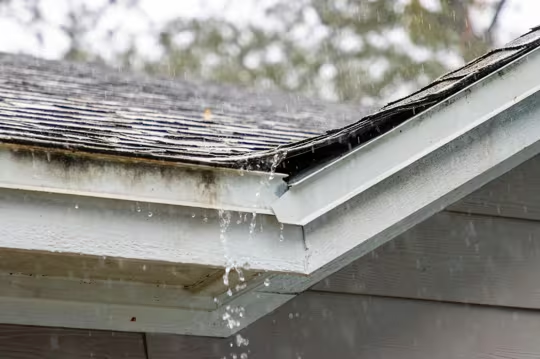
When gutters become overwhelmed during heavy rainfall, the cascading water doesn’t just create that soothing waterfall sound — it can lead to serious plumbing issues. Properly functioning gutters are your first line of defense in moving water away from your home’s foundation and plumbing system.
Prevention tips:
Clean gutters regularly, especially before the rainy season.
Install gutter guards to prevent debris buildup.
Ensure downspouts extend at least 3 to 5 feet from your foundation.
Consider larger gutters if you live in an area with heavy rainfall.
A sump pump is often your final defense against preventing basement flooding, but heavy rain can push these devices beyond their limits. During extended downpours, sump pumps may run continuously, leading to overheating or mechanical failures precisely when you need them most.
Prevention tips:
Install a battery backup system for your sump pump.
Consider a water-powered backup pump as secondary protection.
Test your sump pump regularly before rainy seasons.
Upgrade to a higher capacity pump if you live in flood-prone areas.
6. Broken Pipes
The dramatic increase in water volume during heavy storms creates additional pressure on your plumbing system. This pressure can find the weakest points in your pipes, turning small weaknesses into broken pipes and major leaks.
Older plumbing systems with corroded pipes are at high risk, as are previous repairs that weren’t properly completed. Also, pay attention to pipes in areas that experience freezing temperatures and improperly secured pipes that can shift during ground saturation.
Prevention tips:
Have a professional plumbing inspection before rainy season.
Replace older pipes proactively, especially in critical areas.
Install pressure regulators to manage water flow during storms.
Know the location of your main water shutoff valve for emergencies.
7. Ground Shifting
Few homeowners realize that saturated soil becomes surprisingly heavy and can shift dramatically during periods of heavy rainfall. This movement can bend, break or disconnect underground pipes in your plumbing system or sewer line.
Prevention tips:
Install flexible pipe connections where possible.
Use pipe materials appropriate for your soil conditions.
Create proper drainage paths throughout your yard.
The best defense against rain-related plumbing disasters is proactive preparation before the rainy season begins:
Schedule a comprehensive plumbing inspection.
Clear all gutters, downspouts and outdoor drains.
Test sump pumps and backup systems.
Repair known small leaks or weak points.
Install backflow preventers where appropriate.
Create and maintain proper yard drainage.
Waterproof vulnerable basement areas.
Know your emergency plumber’s contact information.
By taking these steps before the storms arrive, you can significantly reduce your risk of experiencing serious plumbing emergencies during heavy rainfall.
Probably the most unwelcome thing indoors is the air conditioner quitting right when it’s needed most. Imagine struggling through the sweat because your AC develops a fault while the sun’s blazing.
We’ve made this guide to help you avoid this scenario, focusing on the three most common air conditioner repair parts. With a little bit of knowledge, your home can remain an oasis, no matter the temperature outdoors.
Most Commonly Repaired Parts on an Air Conditioner
Many things can go wrong with an AC, but these three air conditioner repair parts are habitual culprits. Let’s look at what causes them to fail and how much the repairs might cost you. Keep in mind that your location and the brand and model of your HVAC system will influence the cost of your AC repair parts and labor fees.
1. Capacitors
Capacitors initiate and maintain the electrical processes powering your AC’s motor. They’re like temporary storage units for electrical energy, ready to provide the jolt needed to start the motor and keep it running smoothly. When they fail, your AC unit might struggle to start, resulting in inadequate cooling and possible damage to other AC components. Increased energy consumption is another effect and will impact your utility bills.
The most common causes of capacitor faults are:
Weakening or failing due to the constant cycling and electrical demands
Fluctuations in voltage or power surges placing electrical stress on them
Struggle to initiate the startup sequence due to misalignment
Price to Repair or Replace
HomeGuide says you’re likely to pay between $10 and $50 (CAD 14 and CAD 68) for a low-end part and between $60 and $140 (CAD 82 and CAD 191) for one of higher quality. The overall cost for the AC repair ranges between $80 and $400 (CAD 109 and CAD 544).
Maintenance Tips
Watch out for obvious signs of wear and tear, such as bulging or leaking. Consider investing in a quality surge protector to shield your air conditioner from electrical stress and voltage fluctuations. Ideally, schedule professional HVAC maintenance from a trusted air conditioning service provider.
Compressors circulate refrigerant, facilitating its transformation from a gas to a liquid state. This phase change is crucial for absorbing and releasing heat, enabling the AC unit to regulate indoor temperatures effectively. Consequently, it’s a contender for the air conditioning repair part you’ll want fixed first, because when compressors fail, so does the unit’s heating and cooling capacity.
The most common causes of compressor faults are:
Simple wear and tear due to prolonged use, resulting in a gradual deterioration of its internal parts
Inadequate or excessive refrigerant levels, as well as refrigerant cycle issues
Voltage fluctuations, power surges or electrical imbalances placing excessive stress on the compressor
Price to Repair or Replace
Replacing or repairing a compressor is a particularly expensive air conditioning repair. The cost range varies wildly, from as little as $450 to $3,500 (CAD 612 to CAD 4,757), depending on the quality of the part and local labor fees. The size of the compressor is also a factor, with 5-ton units costing substantially more than their 2-ton alternatives.
Maintenance Tips
Regularly inspect the unit for signs of wear and tear, such as oil leaks or unusual noises. Ensure the compressor has proper ventilation, and keep the surrounding area free from debris to optimize airflow. Replace air filters following the manufacturer’s advice and instructions, and schedule routine professional maintenance.
3. Thermostats
Thermostats regulate your home’s temperature by monitoring and controlling the HVAC unit’s operation. Failure can lead to inaccurate temperature readings, unresponsiveness to your input or even a complete system breakdown. Inaccurate readings may cause the AC unit to run excessively, using more energy and increasing your utility bills. Uneven cooling is another unwelcome byproduct of a faulty thermostat.
The most common causes of thermostat faults are:
Dirt and dust in the thermostat’s sensors and components
Wiring problems, loose connections or faulty electrical components disrupting communication with the HVAC system
Thermostats that rely on batteries for power becoming unresponsive or inaccurate due to low or dead batteries
Price to Repair or Replace
Including the unit and professional installation, HomeGuide says you can expect to pay between $140 and $350 (CAD 191 and CAD 476) to replace a thermostat. A significant factor in costs will be the type of thermostat. A manual one can cost as little as $55 (CAD 75) to buy and install, while a top-of-the-range smart thermostat will be in the region of $470 (CAD 639).
Maintenance Tips
To prevent inaccurate temperature readings, place the thermostat away from direct sunlight, drafts and heat-emitting appliances. Regularly clean its sensors and components to remove anything that may affect its precision. Check and replace batteries as needed, typically on an annual basis, and periodically review and recalibrate the thermostat’s settings for accurate temperature control.
All CAD conversions are based on the exchange rate on the date of publication.
Figuring out how to beat the heat can be a challenging proposition, especially when the mercury rises during the summer months. It seems like every method has its drawbacks. Portable and ceiling fans move air around, but they don’t really cool your house. Air conditioning drops the indoor temperature, but it uses a lot of electricity.
If you’re feeling the sting of high utility bills, you may be considering whether opting for a fan over air conditioning can help you manage your budget more effectively. Here’s what you need to know.
How Much Electricity Does a Fan Use Compared to Air Conditioning?
One of the most important reasons to consider using fans is the reduced cost of operation. When compared with the typical window AC unit or whole-home central air conditioning system, fans simply use less electricity. This reduces the cost of operation by a considerable degree. Whole-house fans and ceiling fans are among the most energy-efficient methods for cooling your home. They use between one-fourth to one-hundredth of the electrical power required for AC units.
Is It Cheaper to Run a Whole-House Fan or AC?
How much electricity does a fan use? The National Renewable Energy Laboratory offers the following figures as a basis for comparing costs and energy expenditures:
A two-ton air conditioner costs about 20 cents per hour to operate. Over the entire cooling season, homeowners can expect to pay more than $250 to keep things cool in warmer climates.
An 18,000- BTU window AC unit with an energy efficiency ratio of 8.8 generally costs more than 17 cents per hour to operate.
The cost of operating a whole-house fan is significantly less. In most areas, homeowners can expect to pay 1 to 5 cents for every hour their whole-house fan is in use.
Ceiling fans are recommended by the U.S. Department of Energy as an energy-efficient way to reduce indoor temperatures. Depending on the size and power of the ceiling fan, the cost of operation could be less than 1 cent per hour. A ceiling fan is a low-cost way to increase indoor comfort during the hotter summer months.
How Do Fans Cool Your Home?
Ceiling fans, whole-house fans and portable fans all work on the principle of evaporative cooling. In simple terms, this means that they increase the amount of evaporation of moisture from your skin. Evaporation is a cooling process that removes heat from your skin’s surface and dissipates it into the surrounding air. In this way, your fan can help you to feel cooler — but it doesn’t actually lower the temperature of your indoor air.
Ceiling fans are especially useful in providing targeted cooling for the occupants of the room in which these devices are installed. To get the most from your ceiling fan, however, you must change the direction it spins based on the season. Ceiling fans should turn in a counterclockwise direction during the summer. This will allow the fan to direct air downward at you to cool you off more effectively. During the winter months, however, it is essential to change your ceiling fans to a clockwise spin. This draws cooler air upward to help you feel warmer during winter’s chill.
Both fans and AC units offer some significant advantages and drawbacks for cooling your home. Some of the most important advantages of fans include the following:
Lower energy expenditures
Reduced impact on the environment
Easier installation processes
Lower initial equipment costs
Reduced need for maintenance
However, air conditioners cool much more effectively than fans and may be the only way to keep cool on during the hottest days of summer.
When deciding between a fan or an AC for your home, it is important to think about the average high temperatures in your area during the hottest part of summer. When the outdoor temperature gets too high — over 95 degrees — even a whole-house fan can do little to lower your body’s base temperature. High humidity levels can also reduce the effectiveness of fans in cooling you down. A good compromise could be to use fans on all but the hottest days. By running your window AC unit or central air only when it is absolutely necessary, you can cut your utility costs while reducing your impact on the environment.





You must be logged in to post a comment.