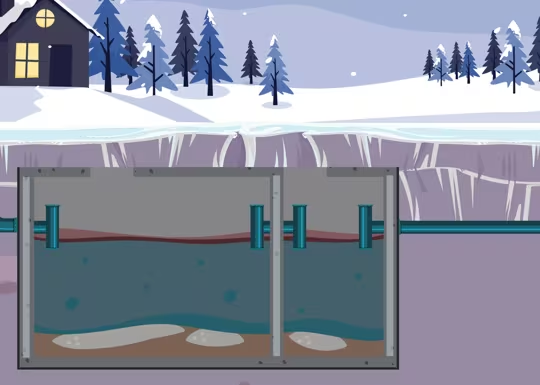
Can a Septic Tank Freeze?

Can a Septic Tank Freeze?

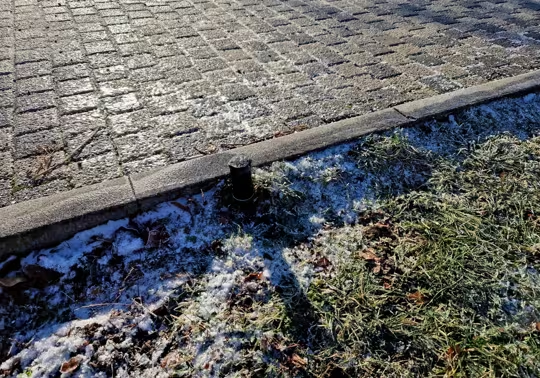
A frozen septic tank can cause wastewater and sewage to back up into sinks, toilets and showers. If you’re experiencing these issues in the middle of winter, your septic tank could be frozen.

This May Also Interest You: How to Reduce Septic Tank Odor

Yes, sadly enough, your septic tank can freeze unless you’re proactive about preparing the pipes, tank and soil for freezing winter temperatures.

Can a Septic System Freeze?

Unless the system is buried deep enough in the ground, you can have a frozen septic system. Also, if you’re not home, it’s possible for the standing water in the drains, outlets and lines to freeze. Once that happens, your system may become blocked and frozen solid.

Can a Drain Field Freeze?

Once the bacteria in the septic tank have done their work, the wastewater runs into a drain field. This field plays a key role in further treating the effluent before it sinks into the soil and ultimately enters groundwater. For several reasons, the drain field may be close to the surface of the ground, and unless adequately insulated, it may freeze.

Conditions That May Cause Your Septic Tank or Drain Field to Freeze

Suppose you don’t take specific precautions during the installation of the septic tank, such as ensuring the tank is properly buried and exposed lines are insulated. In that case, it’s possible to get a frozen septic tank. Conditions that can lead to a septic tank freezing include:

  • Shallow and uninsulated drain pipes.If the pipes from the house to the septic tank are uninsulated, exposed or just below the ground, they may freeze, preventing waste from entering the tank.
  • Snow compaction over the tank and drain field.Soft, fluffy snow insulates, while compacted snow becomes ice. This allows the ground around the tank and drain field to freeze, ultimately causing a frozen septic tank and drain field.
  • Limited use.Running water doesn’t freeze as easily as standing water. If you’re frequently away, the water in the pipes leading to the septic tank can freeze.
  • A deep freeze.Unexpectedly cold weather, such as a polar vortex, can reduce temperatures to below the design parameters of the septic system, leading to freezing.

More Related Articles:

Practical Tips to Prevent Septic Tank Freezing

With changing weather patterns, it’s vital to be proactive in maintaining the septic system correctly to prevent freezing. You can do most of this yourself, but you’ll need specialist help for some tasks. Here are six steps to keep your septic system healthy during winter.

  • Pump out solids in spring.According to the EPA, you should get a septic service provider to remove solids from the septic tank every three to five years. Always do this in spring so the bacteria in the septic tank can reestablish before colder weather comes.
  • Maintain healthy bacteria.Don’t dispose of chemicals, solids or cooking oil into the septic tank. These harm bacteria and clog up the tank. Never use antifreeze, as this is also harmful.
  • Insulate exposed and shallow pipes and vents.Insulate all exposed septic lines, drains and vents. If the drain lines or tank are shallow or above ground, use heat tape and tank heaters to keep the temperature above freezing.
  • Cover the tank and drain field with a layer of mulch.In autumn, cover the tank and drain field with leaves, hay or other loose organic material. This helps insulate and protect the tank and drain field from freezing.
  • Maintain a regular flow of water into the septic tank.Help the bacteria thrive and prevent freezing with a regular flow of warm water into the septic tank. If possible, use hot water in your washing machine and dishwasher, but even a regular flow of cold water is beneficial.
  • Don’t compact or clear snow above the septic tank and drain field.Remember, fluffy snow has great insulation qualities and prevents the ground from freezing, so avoid clearing snow or compacting it above the drain field and septic tank.
How Do You Fix Rusty Water?

How Do You Fix Rusty Water?

You’re feeling a little parched and go to pour yourself a nice, crystal-clear cup of … dirty, red water?! Rusty water isn’t just yucky to look at. It can also affect your skin, your plumbing fixtures and your clothes.

This May Also Interest You: What Causes Water to Turn Brown or Yellow?

Luckily, there are several ways you can deal with the problem yourself, and professionals are standing by just in case you need expert assistance.

Signs There’s Rust in Your Water or Pipes

The biggest sign that you have rusty water is having reddish water coming out of your faucets. Rusty water can also be a fainter yellow color — the more rust there is, the darker the color will be.

Rusty pipes may also cause:

  • Water with a strange odor similar to rotten eggs
  • Water with a strong metallic and/or salty taste
  • Water that’s cloudy or has visible rust particles/chunks
  • Low water pressure as rust builds up, clogs pipes and connections and restricts water flow

Is Rusty Water Harmful?

Drinking rusty water is gross — that telltale smell and taste is highly unpleasant. But it can also cause other issues. Rust in water lines can lead to:

  • Staining where the water hits the bottom of a sink, shower or tub and pools
  • Staining of clothes and plumbing fixtures
  • Skin issues, such as excessive dryness, rashes or contact dermatitis
  • Change in hair sheen and texture
  • Off-tasting food, if you cook or wash produce with rusty water

A small amount of rusty water isn’t typically a major health concern. But there’s some evidence that rusty water can facilitate the growth of Legionella, the bacteria responsible for a serious respiratory illness called Legionnaire’s disease. Rusty water can also be dangerous if someone ingests enough heavily tainted water to accumulate a buildup of heavy metals inside their body.

Can You Fix Rusty Water on Your Own?

It’s possible to tackle the cause of rusty water on your own. There are a few easy ways to clear up your water and cleanse rusty pipes, depending on the severity and root cause of the issue:

Use a Specialized Water Softener

An ion exchange water softener relies on a special chemical process that swaps out hard minerals in your water for “softer” ions. This typically involves a resin bead-filled filter. Those beads are loaded with potassium and sodium that react to minerals like iron and trap them, leaving cleaner water to keep flowing through.

Install a Filter

There are also filters that can be attached to your main water supply to remove rust particles before the water hits your taps. These filters come in different pore sizes, so get professional advice — and you may also need pro installation — as to which size will give you the best results.

Flush or Replace Your Water Heater

If a rusty water heater is affecting your water quality, you can try draining it and flushing out any debris at the bottom of the tank. In fact, experts recommend flushing out your water heater at least once per year, which can keep rust from building up in the first place. If the unit is still rusty after you clean it out, it may be time to swap the old water heater for a new one.

Flush Out Your Pipes

Sometimes, turning on water lines after the system has been dormant for a while can kick up some sediment. The same goes for water lines activated after you’ve attached a new water supply. In both cases, simply running your taps wide open for a few minutes can get rid of the rust and give you beautifully clear water.

More Related Articles:

How Does a Professional Fix Rusty Water?

If your rusty water problem is severe and you can’t fix it using the DIY methods above, it may be time to call in a professional who can use techniques that require licensing and pro-level equipment. An experienced plumber can:

  • Install the new ion exchange water softener suggested earlier
  • Upgrade your home to a whole-house water filtration system that has multiple spots where traps filter water and remove impurities
  • Introduce an air-injection system that uses pockets of air to filter out dissolved iron
  • Replace old or broken steel and cast-iron plumbing that’s more susceptible to corrosion
  • Investigate to see if the rust is coming from the main water line (which may be your responsibility or the responsibility of the water company or local government, depending on where you live and what part of the main is affected)

There can be a certain level of frustration and a definite ick factor involved when your taps shoot out rusty water. But with so many quick fixes in play and expert assistance around the corner, you can get back into the flow ASAP.

How Much Does a Sprinkler System Cost?

How Much Does a Sprinkler System Cost?

If you work hard on your home’s landscaping, installing some kind of home irrigation system might be the best way to ensure your toils don’t go to waste. An irrigation system can keep your lawn green, your flowers and shrubbery thriving, and can even increase the value of your home. What’s more, new smart irrigation systems can connect with weather forecasts and use sensing technology to keep water usage to a minimum. Still, these systems can cost as much as $7,000 for professional installation, so deciding to put one in should be carefully mulled over.

This May Also Interest You: Au Revoir, Standing Water! How to Install a French Drain in 8 Steps

Here are some things to consider as you’re thinkin’ ’bout sprinklin’:

Do You Need a Sprinkler System?

It might seem like an obvious answer, but understanding your need for a sprinkler system is an important part of this process. You’ll want to take into consideration what your actual watering needs are. Do you live in a place that gets plenty of rain? Do you have a large lawn that needs coverage, or are there only a few areas that need consistent moisture? Is your yard planted with local vegetation that can withstand the weather fluctuations in your area, or do you have specialized plantings that need extra attention?

A good way to determine how often your grass needs water is simply to step on it: If it springs back, then it’s fine but if not, it needs to be watered. By conducting this simple test over a few weeks, you’ll get a sense of just how much of a water deficit there may be in your yard.

While installing a sprinkler system might seem like an efficient way to keep your plantings and grass healthy, according to a study by the American Water Works Association ( as reported by the EPA), the most water-efficient way to keep your yard at the proper moisture level is to use a hose. The group says that manually watering with a hose will use 33% less water outdoors than average household usage, while in-ground sprinklers cause 35% more usage. Even more surprising is that sprinkler systems on timers actually use 47% more water than normal.

That being said, if you set up and use your sprinkler system with water usage in mind, you can cut down significantly on the amount you use of this particular natural resource. Plus, if you’ve spent a good amount of money on your landscape, the extra water costs might outweigh the risk of losing precious grass or plants.

One of the key steps you can take to have a sprinkler system function properly is to set it up with zones — a specific set of water outlets to a specific area of your yard. That lets you give low-water usage plants less moisture, while delivering greater amounts to grasses or other plantings that need it.

Are You a Drip…

There are basically two types of irrigation systems for your yard: drip and sprinkler. Drip systems consist of a long stretch of either flexible or rigid tubing that runs to a specific part of your yard. The tubing can be either above ground or buried 2 inches below ground. Water travels through the tube and slowly leaks out into the surrounding soil, which has the benefit of feeding the roots of your greenery directly.

According to the AWWA, drip irrigation systems use just 16% more water than standard households versus 35% for normal sprinkler systems — so they’re also more water efficient. Part of the reason is that sprinklers broadcast water over a large area, which means some of that moisture is lost to evaporation; drip systems avoid this problem. That being said, drip systems are really best for watering specific areas of your yard, such as flower beds, rather than an entire lawn, which can be better served by the greater range of a sprinkler system.

According to Lawn Love, you can expect to pay an average of $223 to $2,000 (CAD 306 to CAD 2,745) per watering zone for a drip irrigation system with the tubing above ground, and about $815 to $4,335 (CAD 1,118 to CAD 5,950) per acre for a system with buried tubes, which is helpful if you’ll be mowing the area where it’s installed.

…Or Are You More of a Sprinkle?

The second major type of home sprinkler system is one that uses a series of sprinkler heads sunk in the ground and spaced apart to provide broad irrigation coverage. These systems consist of a main water line and a series of branch lines that travel to the individual sprinkler heads.

The ultimate cost of a sprinkler system is determined by a number of factors, including how easy it is to dig the trenches in your yard, how many zones and heads you’ll need, whether you’ll do the job yourself, and whether local building codes require you to hire a plumber to connect the system to your home’s water supply.

More Related Articles:

DIY or Pro

According to data from Lawn Love, a professionally installed sprinkler system for an average yard measuring 1,000 to 3,000 square meters will run between $500 and $1,500 (CAD 700 and CAD 2,100). Doing the job yourself, however, would save significant cash, ringing up at around $130 to $260 (CAD 180 to CAD 360). If your landscape watering needs are relatively simple, or you only need to sprinkle a portion of your yard, you may very well wish to go it alone.

One important consideration to take into account before you begin is to measure your home’s water pressure, which you can do by attaching a pressure gauge to your hose bib. Most sprinkler systems best operate around 30 psi (pounds per square inch of pressure) or more, so if your pressure is lower than that, you’ll need a system designed for a more minimal flow.

Keep in mind that a pro may be able to bring benefits to the job that you might not otherwise be able to take advantage of. Pros know their way around local permitting laws, will work with a plumber if needed to get your system installed legally, and will be aware of which parts of your yard to avoid due to water lines or other utilities. A good irrigation system installer will also help you plan the number of sprinkler heads and zones you’ll need for your particular area of the country and the types of plants you have. If you’re still in the planning stages of your landscaping project, pros can also provide input in terms of what to plant where to minimize water usage.

Smart Vs. Not

Beyond choosing either a drip or sprinkler system, and choosing the right sprinkler heads for your needs (which are inexpensive at around $45 (CAD 60) for a pack of four), you’ll also want to decide what kind of control system you’d like your system to run off of. Thumbtack says this can be as simple as a heavy-duty sprinkler timer that clicks your system on and off at the same time each day — which could cost as little as $50 (CAD 70) for a six-zone controller — to a modern “smart” system that connects to the internet and special in-ground sensors to adjust your watering schedule based on weather forecasts and soil saturation. A smart sprinkler controller should run in the range of $60 to $300 (CAD 80 to CAD 415), depending on the features you need.

The number of zones you set up will also factor into the final cost for your project. According to HomeGuide, every additional zone you add to a system will run about $300 to $700 (CAD 415 to CAD 960) in extra expense.

All CAD conversions are based on the exchange rate on the date of publication.

Your Air Conditioner Struggles With High Humidity Just as Much as You Do

Your Air Conditioner Struggles With High Humidity Just as Much as You Do

Maintaining a comfortable temperature is the one job you require of your air conditioner, but high humidity can make you lose your cool — literally.

This May Interest You: Read This Before You Install Central Air Conditioning

Air conditioners don’t work as effectively when the air outside is muggy. Fortunately, there are a few things you can do to stay chill and comfy even on humid days.

Understanding Indoor Humidity

Humidity levels describe how much moisture is in the air, and ideal levels for home interiors are between 30% and 50%. High moisture levels can contribute to mold and mildew growth and lower indoor air quality, so keeping humidity under control is essential.

While your AC might struggle with high humidity, it also helps remove moisture from the air to combat excess humidity inside your home. If you live in a humid climate and your AC can’t keep up, you might need to take extra measures to control indoor humidity.

How Does Humidity Affect How an Air Conditioner Works?

In a humid environment, your AC works harder to maintain a comfortable temperature. Humid air tends to feel warmer, so your air conditioner has to cycle on more frequently to provide the same amount of cooling power.

Does an Air Conditioner Work Better in Lower-Humidity Environments?

In low-humidity environments, the air naturally feels cooler and your air conditioner doesn’t have to work as hard. This can extend the lifespan of the unit and put less stress on internal components. Because humidity affects how warm the air feels, your AC unit uses less power to cool dry air.

Does an AC Help With Humidity?

Your air conditioner helps reduce indoor humidity by pulling moisture from the air. This moisture condenses on the evaporator coil and drips into a collecting pan. In general, your house shouldn’t feel humid with the AC running.

Why Does My Air Conditioner Feel Like It Can’t Keep Up With High Humidity?

If you notice a decrease in performance of your air conditioner in high humidity, there could be a problem with the unit. Clogged drain lines, leaky ducts and frozen or dirty evaporator coils can all prevent your AC from effectively cooling humid air. You may want to call a professional for a tune-up if your air conditioner isn’t keeping up with high humidity.

More Related Articles:

How Should You Maintain Your Air Conditioner in High-Humidity Conditions?

When it comes to regular maintenance of your air conditioner, high humidity presents a few challenges. The first step of AC maintenance in high-humidity environments is to clean or change the filters regularly. Anything that obstructs airflow can reduce AC efficiency, so clean filters help improve performance. Check the refrigerant levels if your air conditioner still seems to have trouble working properly in a high-humidity environment. Low refrigerant levels could hamper the AC’s ability to wick water from the air.

If everything is clean and working properly, try running your AC on low speed or setting the fan to auto. This slows the airflow and gives the evaporator coils more time to extract moisture.

What Else Can You Do to Remove Humidity and Improve AC Performance?

Humidity levels inside the home are a direct result of outdoor humidity levels. Keeping doors and windows closed while your AC is running keeps the air inside cooler and drier. If your home has chronic high humidity, check for cracks in the walls or foundation, drafty windows or insufficient door seals. Excess condensation on pipes, plumbing leaks and pooled water in basements also impact humidity levels. Sometimes a simple home repair can keep moisture out and make it easier for your AC to run efficiently.

Older systems may have more trouble dealing with high levels of humidity. In some cases, you might want to invest in a new AC unit with modern features designed to tackle excessive humidity. Mini-split systems let you maintain different temperatures in different parts of your home, and units placed high on a wall may capture more warm, moist air than traditional central air conditioners.

If your air conditioner doesn’t remove enough humidity to keep you comfortable, you may want to consider getting a dehumidifier. Whole-home dehumidifiers integrate with your existing HVAC unit to pull moisture out of the air as it flows through the system. Portable dehumidifiers decrease the humidity levels in a small space, such as a single room.

How to Make Your House Smell Better

How to Make Your House Smell Better

Every home has its own scent — good or bad — and having a home that smells good can be welcoming and cozy.

This May Also Interest You: What’s a Home Improvement Loan and How Do You Get One?

Why Does My House Smell Bad?

First, you need to rule out the really bad smells. Sewage, sulfur and gas odors need to be addressed ASAP by a professional. These signal that there’s something wrong with your pipes, drains or gas lines.

While some house odors have an easy-to-track-down source (such as your furry friends’ dirty litter boxes, overflowing garbage or a bag of burned popcorn in the microwave), others seemingly come from nowhere. Musty or damp smells could be from mold and mildew. Stale odors can be the result of stagnant air, dust and humidity. Bad smells can come in from the outside, too. If you live in an industrial area or a farming community, icky scents can infiltrate your home.

Volatile organic compounds are the culprit for many unknown home odors. Volatile organic compounds are gasses that certain solids and liquids give off. The off-gassing of some products — like paint, adhesives and cleaning supplies — can be pretty obvious. But a variety of products can release organic compounds when you use them, and even in storage. Here’s a short list:

  • Building materials
  • Furniture
  • Copiers and printers
  • Paint
  • Cleaning supplies
  • Aerosol sprays
  • Solvents
  • Adhesives
  • Air fresheners
  • Cosmetic products
  • Dry-cleaned clothes

But volatile organic compounds aren’t just stinky. Some can be chemicals (like benzene and formaldehyde) that are harmful to your health and impact indoor air quality.

10 Ways to Get Your Home Smelling Good

Let in Fresh Air

Opening the windows — as long as the weather isn’t too hot or cold — is a great way to make your home smell great. It lets in fresh, clean air from outside and can make it feel less stuffy. The natural scent of the outdoors can be especially pleasant if you have nearby flowers. Make sure your window screens are intact so you don’t let in any unwanted insects. Spread the fresh air around with floor and ceiling fans.

Regularly Vacuum Carpets

Carpet lasts between five and 15 years, depending on the material and how well it’s cared for. It also accumulates scents over time from spills, dust, odors and walking on it. Regular vacuuming and occasional shampooing can help keep your carpets smelling fresh. Sprinkling baking soda on carpets and rugs can absorb even more odors before vacuuming.

If your carpets are old, you might consider having a professional replace them. Replacing carpets has a big effect on the overall smell of a space.

Get Rid of Mold

No number of reed diffusers or air fresheners is going to put a dent in the smell of mold if you don’t do something about the root cause. If you can see the mold and reasonably clean it up (such as mold around porcelain bathroom fixtures), go ahead and do so. But if you’re smelling mold and mildew and you can’t see it, you’ll want to contact a mold remediation specialist.

Wash Curtains and Linens

Curtains can absorb bad smells over time, like unwashed clothes. They also tend to get dusty. Laundering your curtains can make a difference in the overall smell of your home. Make sure your curtains or drapes can actually be washed, as some materials may be dry-clean only. When you rehang them, use a garment steamer to get out any wrinkles.

On that note, you should clean any linens you have lying around. Blankets, duvets and bed linens can also trap smells. Launder them with pleasant-smelling dryer sheets or fragrant laundry detergent to get a lasting air freshener effect.

Put Baking Soda in the Fridge

Putting an open box of baking soda in the fridge can help absorb odors from food and keep your fridge smelling clean. You can use a traditional box of baking soda or one specifically made for fridges — it has a breathable panel on the side to freshen your fridge. Change it out once every three months or more often if you regularly store smelly foods, like fish.

More Related Articles:

Run Lemons Through the Garbage Disposal

A kitchen sink with a garbage disposal is really convenient for cleaning up food waste and scraps. But over time, it can develop an unpleasant smell. To help counteract this and disinfect it, cut up a whole lemon and put the pieces through the garbage disposal while running cold water. The acid in the fruit helps disinfect internal parts, and the rind and citrus oils provide a pleasant, clean smell.

Consider an Air Purifier

Although air purifiers are more expensive than other ways to make your home smell better, they’re a great long-term solution. Air purifiers trap dust and other particulates and filter odors from pets, food, garbage and other unpleasant smells in your home. Some are small enough to sit on a tabletop, while others are designed for larger living areas. There are even whole-house options.

Make a Simmer Pot

One of the best home scents can be created with a little water and some ingredients you might have in your fridge. Slice a lemon, orange or lime and add it to some fresh herbs, like basil, mint or lavender, in a pot. Fill it with water and simmer it on your stovetop on very low heat. Slowly, over time, the scents from the citrus and herbs will infuse your house. Apples, cinnamon sticks and cloves are another great combination to make your house smell great.

Use Candles, Diffusers or Room Sprays

Sometimes, making your house smell better is about removing bad smells, but it can also be done by adding pleasant fragrances. Scented candles, reed diffusers and room sprays are all effective at making your house smell better. You can select your preferred scents — whether floral, fruity or clean — and they help create a cozy ambience whether or not you’re entertaining guests.

Beeswax and soy candles generally burn cleaner than traditional paraffin candles because they produce less soot, and diffusers can be used with essential oils. Room sprays work well in any room of the house, including bathrooms.

Be careful about mixing fragrances together to avoid your house smelling like a scented candle factory. And consider only using them when you’re not cooking in the kitchen, as fragrances from candles and scents from food can be unappealing when mixed together.

Cook and Bake

This one seems obvious, but cooking and baking are great natural ways to make your house smell great, even if it’s temporary. Sweet baked goods and fresh bread are some of the best appetizing smells, and savory smells can be enjoyed from seared meats and simmering sauces.

Well Water Vs. City Water: Everything You Need to Know

Well Water Vs. City Water: Everything You Need to Know

Turn on your kitchen faucet, and water flows like magic — but have you ever wondered about its journey to your glass? Whether it’s traveling through miles of municipal pipes or being pumped from deep beneath your backyard, your home’s water source plays a key role in your daily life.

This May Also Interest You: Have Hard Water? Here’s How to Know

Understanding the difference between well water and city water might not seem exciting — until your morning shower runs dry or your coffee tastes a bit different.

What Is the Difference Between Well Water and City Water?

The fundamental difference lies in where your water comes from and how it gets to your home. City water is supplied through a complex infrastructure of treatment facilities and underground pipes. It undergoes rigorous treatment processes and is regularly tested by local authorities.

Well water comes from an underground aquifer accessed through your well. It provides nutrients and minerals since it’s naturally filtered through layers of soil and rock. While city water systems handle treatment and testing for you, well water leaves you responsible for water quality and system maintenance.

Key Differences Between Well Water and Municipal Water

Here are the essential factors that set these water systems apart:

  • Treatment methods. Municipal water undergoes standardized treatment processes, while well water may require individual water filter systems.
  • Testing requirements. City water is tested by authorities to make sure water is safe, but well owners must arrange privatewater quality testing.
  • Infrastructure. City water relies on municipal pipes and systems, while well water depends on a water pump and private system.
  • Emergency preparedness. Natural disasters like floods can affect both systems differently, requiring distinct approaches to water security.

Can All Houses Get Both?

Just like a municipal sewer or septic system and in-ground septic tanks, not every property has access to both options. Your location largely determines your available water sources.

City Water Pros and Cons

Does city water require a water pump? Not for you as a homeowner, because the city maintains the pumping system. Municipal water service is typically collected from surface water and is available in urban and suburban areas, though it requires your property to be within reach of existing water lines. While this service is common in more populated areas, you might find it limited or completely unavailable in rural locations.

Well Water Possibilities

There are several pros and cons of well water. Well water systems are most prevalent in rural areas where groundwater is accessible and property size permits drilling. While there are many well water advantages, local regulations may restrict well installation. These water well systems typically work in tandem with septic systems where municipal services aren’t available.

Is Well Water Free?

Do you pay for well water? While well water doesn’t come with a monthly water bill like city water, it’s not exactly free. The costs of well water systems fall into two main categories: installation and maintenance.

Well systems require initial drilling and equipment setup, followed by pump installation and home connection. Some properties may also need additional water treatment systems depending on water quality.

Maintaining a well system involves regular water quality testing, system maintenance and repair costs. Homeowners should also factor in electricity costs for running the pump and eventual equipment replacement over time.

images

More Related Articles:

What About City Water?

City water systems provide certain conveniences but also come with their own considerations. Here’s what you should weigh when evaluating city water service:

  • The benefits of city water include consistently treated and monitored water.
  • Users enjoy reliable pressure and flow, and municipalities handle line repairs and maintenance.
  • While convenient, city water comes with monthly bills and limited control over treatment methods.

Making the Right Choice for Your Home

Whether you’re using well water vs. city water, understanding the source helps you make informed decisions about your personal water use. It falls to you to select filtration systems, address specific water quality issues and ensure drinking water remains safe through proper maintenance and monitoring.

Both well water and city water can provide safe, reliable water for your home when properly maintained. Well water offers independence and potentially better-tasting water with natural minerals, while city water provides convenience and regulated safety standards. Understanding these differences helps you make the best choice for your situation or better manage the water system you currently have.

Remember that local regulations, environmental factors and your property’s location may influence or limit your options. Consulting with local water quality experts or municipal authorities can provide specific guidance for your area’s water systems and requirements.

5 Benefits of Maintaining Your Plumbing System

5 Benefits of Maintaining Your Plumbing System

Emergency plumbing jobs can be quite expensive. Forbes says plumbers may charge anywhere from $100 to $500 (CAD 135 to CAD 670) per hour for such jobs, and some add fees of hundreds of dollars if you need emergency work at night or during the weekend.

This May Also Interest You: Plumbing Repair Cost Guide

Luckily for homeowners, regular plumbing maintenance can help reduce the chance of expensive emergencies arising. Here are the top benefits of plumbing maintenance.

1. Better Water Pressure

Plumbing system maintenance can keep all the inner workings of your home’s waterways clear and clean.  When everything is working well — from supply pipes to showerheads — your water pressure tends to be higher than it is when things aren’t working well.

General plumbing maintenance that supports good water pressure provides a number of benefits for your household, including:

  • Better quality of life. Relaxing in a shower with the right water pressure offers an experience that is better than taking a shower without good water pressure. It provides massage relief for your muscles and can help you rinse your body and hair better.
  • Time savings. Better water pressure means you’re not waiting around for the tub to fill or for a pot of water to boil the spaghetti in.
  • Cleaner dishes. More water pressure can make it easier to clean dishes, especially if you’re tackling manual dishwashing jobs.

2. Fewer Leaks

When it comes to plumbing and maintenance, a major benefit is a reduction in leaks. When you check your systems regularly, you can identify weak points or issues and correct them before water starts seeping through from pipes or fixtures.

Plumbing maintenance also ensures that you find those small leaks before they become big leaks. That can mean a small inconvenience and expenses rather than a big problem, such as mold growing under your floors or structural problems because water has weakened beams or flooring.

3. Reduce Utility Costs

A top plumbing maintenance tip for homeowners is to get their systems checked regularly. This can help you reduce your utility costs by finding and stopping small leaks. Even a small leak can mean you’re using many gallons of water you wouldn’t otherwise use, resulting in potentially hundreds of dollars in utility costs every year.

More Related Articles:

4. Safer, Healthier Water and Home

When your plumbing is in good repair, your water is generally safer. For example, if any of your pipes are corroded or damaged, pollutants and chemicals could be making their way into your water without you knowing it. That can present both short-term and long-term health hazards for your family.

If your fixtures or pipes are leaking, even a little bit, it can result in mildew and mold growth. This can occur inside your walls, beneath flooring and in other areas that you can’t see and may not know about. Over time, mold and mildew can create a toxic environment in your home that is disastrous for your health. If the problem gets bad enough, you may not be able to correct it and may have to leave your home. However, some plumbing preventative maintenance can keep you from ending up with such results.

5. Reduced Chance of Emergency Repairs

Finally, as previously mentioned, plumbing maintenance substantially reduces your chances of needing emergency repairs. This can save you a lot of money, but it also provides peace of mind. You can live your life, invite friends and family over and know that your plumbing is likely to hold up to whatever you throw at it.

Should You DIY Plumbing Maintenance?

If you have some basic understanding of plumbing and are fairly handy, you can do some plumbing maintenance yourself. For example, you can check for leaks around your fixtures or install a new faucet in the bathroom. However, it’s typically a good idea to call on a professional to handle larger maintenance and repairs.

If you buy new plumbing fixtures, such as a shower, bathtub or water heater, ask about maintenance and warranty plans so you know what’s covered. Consider investing in a plan to cover plumbing services, especially if they include seasonal inspections.

5 Dishwasher Maintenance Tasks You Should Do to Avert Disaster

5 Dishwasher Maintenance Tasks You Should Do to Avert Disaster

Your dishwasher saves you time and gives your dishes a squeaky-clean finish that’s hard to match when washing by hand. But what do you do when your dishwasher isn’t performing the way it should?

This May Also Interest You: Weird Sound Coming From the Dishwasher? How to Diagnose Dishwasher Noises

The last thing you want when you have a mountain of dishes in the sink or guests coming over is a faulty dishwasher. Fortunately, performing some routine maintenance can help reduce the chances of the most common issues, and it can even extend the life of your machine.

Common Dishwasher Problems

These dishwasher issues can be prevented with a few simple maintenance steps:

  • Dishwasher not draining or draining slowly
  • Water leaks
  • Spots on dishes
  • Bad odor
  • Poor water pressure
  • Broken racks

Regular Dishwasher Maintenance Tasks

Check out these five tips for maintaining a well-running dishwasher.

1. Scrape Your Dishes Before Loading Them

Dishwasher quality has improved over the last several decades, so it’s no longer necessary to “pre-wash” your dishes before loading them. However, scraping large or loose food particles from your dishes can help prolong the life of your dishwasher and prevent a variety of issues.

To determine if this is an issue for you, look for:

  • Trapped food particles or grease. This can leave your dishwasher drain clogged.
  • Spray nozzles that are blocked. This reduces the pressurized water coverage on your dish loads and affects cleaning performance.
  • Food and grease lodged in the crevices of your dishwasher. This debris can decompose and create a foul smell.

2. Check Your Hoses and Gaskets

The hoses and gaskets are an often overlooked area of dishwasher maintenance. If they’re degraded, you could find yourself with a leaky machine that causes damage to your floors. It’s important to look over any of your seals and connections to make sure there are no splits in your lines, that hoses are connected securely and gaskets are still intact and pliable.

Signs of a damaged hose or gasket include:

  • Hard water deposits at hose connection sites. This presents as a chalky white substance on the edge of your hose and connectors.
  • Signs of water damage below or behind your dishwasher. These could be indications that leaks are occurring regularly, and you will need to find the source.
  • Leaking or pooling water at the front of your dishwasher. This can be a sign of a worn door seal.

More Related Articles:

3. Clean Mineral Deposits

Unless you have a water softener, the water that runs through your dishwasher is carrying a variety of minerals that may harden to create limescale within your dishwasher. Limescale builds on itself, so these deposits can easily clog spray nozzles and hoses, reducing water flow through the entire system. It can also put extra wear on your hoses and gaskets, reducing their flexibility and making them less effective.

A good water softener is the best preventative measure, but you can also run a vinegar cycle through your dishwasher to reduce limescale buildup and scrub at the deposits you can see. This is also effective for eliminating mold and mildew.

You may have limescale issues if:

  • Your dishes come out with hard water spots.
  • Your dishes are coming out dirty. Check the spray arm and nozzles for mineral deposits from your water. Take a safety pin and gently clear the debris from the nozzles.
  • You see a white, chalky substance along the edges of your door seal. Clean this regularly to maintain the integrity of the seal.
  • Your dishwasher is not draining completely. Limescale can also build up inside pipes and hoses, slowing wastewater outflow.

4. Check the Coating on the Dish Rack Tines

Some dishwasher racks are made of metal and coated in plastic to protect them from rusting. Any chips or cracks in this coating allow water inside to the metal and should be addressed immediately.

To see if your racks need to be resealed, look for:

  • Silver or dark spots or lines along the rack wires. Coatings are usually done in light colors to make it easier for you to see any damage.
  • Rough or uneven spots in the smooth coating, possibly indicating a new crack or worn area.

5. Clean Your Screen Regularly

Most dishwashers have a screen installed to catch loose silverware, broken glass bits and large food particles to protect hoses and pipes from being clogged. It’s important to check this screen to ensure it is clear to allow easy flow when your dishwasher drains.

Possible indicators it’s time for your screen to be cleaned include:

  • A bad odor. This may be coming from rotting food trapped in the screen.
  • Slow drainage. Limescale on the screen can cause this.

Dishwasher Maintenance Improves the Life of Your Machine

Performing routine maintenance tasks is the best way to maximize the lifespan of your dishwasher and ensure optimal performance through every cycle. Although your dishwasher isn’t going to last forever, it’s important you can count on it to clean your dishes well without causing damage to your floors or plumbing. Taking the time to go through these maintenance actions is the easiest and most cost-effective way to get the most from your machine.

Why Is My Refrigerator Sweating?

Why Is My Refrigerator Sweating?

Have you ever gone to make yourself a snack or grab a drink from the fridge only to open the door to a soggy mess? You notice drips of water on the shelves. There’s condensation in and around the bottom of the fridge.

This May Also Interest You: How to Stop Condensation in the Attic

You may be worried your appliance is on the fritz. However, a refrigerator sweating usually isn’t as serious as it looks.

Why Is There Condensation in My Fridge?

A small amount of refrigerator sweating is normal. Warmer air from outside the fridge creates moisture on the inside. When the moist air meets the cold shelves and the inside of the door, that moisture turns into water. If you have a large family and the door is open and shut frequently, it can lead to a humid refrigerator and items in the refrigerator sweating. There are other reasons you may notice moisture inside your fridge:

  • Poor door seals. Faulty door seals allow warm air to leak inside your fridge. This can lead to a buildup of condensation.
  • Overloaded fridge. If your fridge is too full, the air can’t flow properly, which causes high humidity levels.
  • Faulty thermostat. If you notice food isn’t as cold, or the temperature inside your fridge keeps rising, it could indicate a faulty thermostat.
  • Hot climate. If you live in an area where it’s unusually warm, it’s more common to find a buildup of condensation inside your fridge.

How Do I Stop Condensation in My Fridge?

Once you understand why it’s happening, you may be able to stop your refrigerator sweating and prevent a repair call.

  • Limit the number of times you open the door. When you do open the door, don’t stand with it open for extended periods while you try to find a snack.
  • Examine the door seals to make sure they aren’t cracked or damaged. Worn-out seals can cause food to sweat in the refrigerator and make your fridge work harder. When your fridge works overtime, it can cause an increase in energy costs.
  • Use a small outdoor thermometer to check the interior refrigerator temperature and adjust as needed. According to the USDA, the ideal temperature for the inside of your fridge is 40 degrees Fahrenheit.
  • Clean out your fridge and throw away expired and unnecessary items. Organize the contents in a way that air can circulate freely between items.
  • Avoid placing hot leftovers in the fridge. Allow the items to cool before putting them inside.

Why Is the Food in My Refrigerator Sweating?

If you have high levels of condensation on the inside of your fridge, you may notice that not only is your refrigerator sweating, but the food packages seem to sweat, too. It’s typically the same condensation effect causing this. When you place leftovers on a shelf, let them cool to room temperature first. If you place warm containers, it can cause moisture and then water to form. Also, wrap items carefully in foil or place them inside a plastic storage bag. Uncovered foods tend to release more humidity, which can result in sweating.

Some refrigerators have humidity control levels in certain drawers. Placing produce and other fresh food in high-humidity areas can sometimes lead to sweating.

More Related Articles:

Why Is There Condensation Outside of My Fridge?

A refrigerator sweating on the inside tends to be more concerning than moisture on the outside. Occasionally, you may notice the outside of your fridge is wet to the touch, and here’s why.

  • Door seals. Split, cracked or broken door seals can cause water inside and on the outside of the fridge.
  • High-room humidity. If your kitchen is warm or humid, it can cause the exterior of the fridge to feel moist if the surface is much colder.
  • Damaged insulation. Older refrigerators or ones with damaged insulation may allow cold air to leak. This can cause exterior moisture buildup.

How Do I Stop Condensation on the Outside of My Fridge?

A few simple adjustments to your fridge are usually all that’s needed to eliminate exterior moisture. Start by placing a portable dehumidifier near the fridge to reduce humidity in the room. Make sure there’s at least 1 inch of space between your fridge and surrounding walls for maximum airflow. Finally, open the doors and inspect the seals. If you notice any damage, replacing the seals can make a huge difference. If you think insulation may be a culprit, contact a professional to schedule a repair.

Can Mold Grow in My Home During Winter?

Can Mold Grow in My Home During Winter?

While it may seem that mold growth only happens in the summer when the weather is warm, that’s not exactly the case. The right conditions for mold can occur in any season, regardless of what the temperature is like outside. Cold weather can even create an ideal environment for mold growth in certain situations.

This May Also Interest You: Does Your Home Need a Whole-House Humidifier?

Does Mold Grow During the Winter?

Mold can grow in the winter and just about any season or weather. As long as the right conditions are met in terms of excessive moisture and humid environments, mold will grow. Cold weather does not kill mold. All really cold temperatures do is cause the mold spores to become dormant. This means that when the temperature levels rise up again, the mold spores will begin to spread again. It’s best to prevent mold from growing in the first place, and that starts with maintenance before and when winter arrives.

There are even certain types of mold that can adapt to winter conditions and thrive. Cladosporium, Alternaria and Penicillium are common indoor molds that can appear in the winter.

Causes of Mold Growth

Poor Ventilation

A lack of sufficient ventilation is often the main cause of mold growth during the winter. Since most homeowners seal up their homes before winter arrives to try and keep the heat inside, this can have unintended consequences when there is a lack of adequate airflow.

High Humidity

If humidity levels rise dramatically in your home, it results in condensation on damp surfaces like the windows, bathrooms, attic, crawlspaces and basement. The longer the condensation stays in these areas, the higher the likelihood that mold will grow. Adding an exhaust fan to your kitchen and bathroom can help reduce condensation. You can also clean these areas and get rid of moisture routinely, but you’ll want to find the source of the condensation, which is more than likely the result of insufficient ventilation.

You might have windows and doors closed for a long period of time when it’s cold, which prevents fresh air from coming inside. Sometimes, there simply aren’t enough roof vents on the roof, preventing sufficient circulation and leading to mold in the attic. If you sense that your attic feels very hot or there is lots of condensation on your attic walls, it’s worth getting your attic and roof inspected by a professional who can determine if additional vents are needed.

Poor air circulation leads to high humidity levels and condensation on your walls, windows and pipes. According to the United States Environmental Protection Agency, you should keep the humidity levels in your home between 30 and 50 percent. You can prevent mold growth in the first place by ensuring that your house has a good ventilation system that keeps humidity and moisture levels at a minimum. A ventilation system can also safeguard your roof, extending its longevity.

Lack of Insulation

If your home insulation isn’t properly installed, it can block the soffit vents responsible for letting outside air inside. Too much insulation can also block attic vents and air ducts that transport air from the HVAC system around your house. This is a common issue with improperly installed insulation and can cause all sorts of other problems as well.

If you think your vents are blocked off, you can use a leaf blower to blow the air and try to push the insulation out or call a contractor to do it for you to prevent further issues.

More Related Articles:

Leaky Roof

Roof leaks can happen at any time, and if the winter months in your area come with harsh storms or hail that can damage your shingles, it can lead to a breach. As water enters your attic, this excessive moisture can nurture mold growth along the walls, especially the insulation. Unfortunately, when this happens, your options are quite limited. You’ll need to call a roofer to inspect the roof, repair any leaks and assess any water damage in the attic.

If your insulation has received extensive water damage, you may also need to get it replaced. That’s why it’s often best to have a professional contractor inspect your roof and make sure it’s in good condition before winter arrives.

Drafty Windows

The roof isn’t the only place that can allow water to seep inside your home. Take a look at your windows and look for gaps or cracks. Leaky pipes or pipes with condensation can be sneaky places where mold appears, and they aren’t always the most noticeable since they’re often out of sight. Have a plumber inspect your pipes to check their condition. You can also install insulation around the pipes to reduce condensation.

If you find mold, you can kill it with a combination of water and bleach or vinegar. Just ensure that you identify the main source of its growth to fully get rid of it, or call a professional to come and take a look.