7 Plumbing Issues Caused by Heavy Rain

7 Plumbing Issues Caused by Heavy Rain

Your home’s pipes and drainage systems face unique challenges during torrential rainfalls that can turn your rainy day into a soggy nightmare.

This May Also Interest You: How to Use a Drain Snake and Unclog Your Toilet

Before you find yourself ankle-deep in unwanted indoor pools, let’s dive into the common plumbing problems that heavy rainfall can create and how to prevent them.

1. Sewer Backups

Municipal sewer lines are designed to handle normal water flow, but during intense storms, they can reach capacity quickly. When this happens, the wastewater has no choice but to reverse course, potentially entering your home through toilets, floor drains or shower drains.

Prevention tips:

  1. Install a backwater prevention valve that lets water flow out but not back in.
  2. Have your sewer line inspected regularly for potential blockages.
  3. Consider elevated toilets in basement bathrooms.
  4. Avoid flushing toilets repeatedly during heavy rainstorms.

2. Clogged Drains

Heavy rain doesn’t travel alone — it brings friends in the form of leaves, twigs, dirt and debris that can create stubborn clogs in your drainage system. Can heavy rain affect plumbing problems you already have? Yes, because minor clogs can quickly become major blockages when rain adds pressure to the system.

Prevention tips:

  • Schedule professional drain cleaning before the rainy season begins.
  • Install guards on outdoor drains to catch debris.
  • Keep gutters and downspouts clear of obstructions.
  • Avoid using drains excessively during heavy rainfall.

3. Foundation Damage

Water pooling around your foundation isn’t just bad for your landscaping — it can lead to cracks that compromise your entire plumbing system. When heavy rainfall causes water to collect against your home’s foundation, the resulting pressure can damage underground pipes and create leaks that aren’t immediately visible. Watch for unexplained increases in water bills, damp spots, mold or mildew in your basement or shifting or settling of your home’s foundation.

Prevention tips:

  • Ensure proper grading to direct water away from your home.
  • Install or maintain functional gutter systems.
  • Create a rain garden to absorb excess water.
  • Use foundation waterproofing techniques.

4. Overflowing Gutters

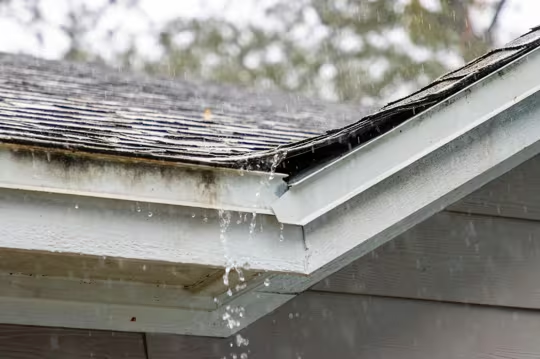
When gutters become overwhelmed during heavy rainfall, the cascading water doesn’t just create that soothing waterfall sound — it can lead to serious plumbing issues. Properly functioning gutters are your first line of defense in moving water away from your home’s foundation and plumbing system.

Prevention tips:

  • Clean gutters regularly, especially before the rainy season.
  • Install gutter guards to prevent debris buildup.
  • Ensure downspouts extend at least 3 to 5 feet from your foundation.
  • Consider larger gutters if you live in an area with heavy rainfall.

More Related Articles:

5. Sump Pump Failures

A sump pump is often your final defense against preventing basement flooding, but heavy rain can push these devices beyond their limits. During extended downpours, sump pumps may run continuously, leading to overheating or mechanical failures precisely when you need them most.

Prevention tips:

  • Install a battery backup system for your sump pump.
  • Consider a water-powered backup pump as secondary protection.
  • Test your sump pump regularly before rainy seasons.
  • Upgrade to a higher capacity pump if you live in flood-prone areas.

6. Broken Pipes

The dramatic increase in water volume during heavy storms creates additional pressure on your plumbing system. This pressure can find the weakest points in your pipes, turning small weaknesses into broken pipes and major leaks.

Older plumbing systems with corroded pipes are at high risk, as are previous repairs that weren’t properly completed. Also, pay attention to pipes in areas that experience freezing temperatures and improperly secured pipes that can shift during ground saturation.

Prevention tips:

  • Have a professional plumbing inspection before rainy season.
  • Replace older pipes proactively, especially in critical areas.
  • Install pressure regulators to manage water flow during storms.
  • Know the location of your main water shutoff valve for emergencies.

7. Ground Shifting

Few homeowners realize that saturated soil becomes surprisingly heavy and can shift dramatically during periods of heavy rainfall. This movement can bend, break or disconnect underground pipes in your plumbing system or sewer line.

Prevention tips:

  • Install flexible pipe connections where possible.
  • Use pipe materials appropriate for your soil conditions.
  • Create proper drainage paths throughout your yard.
  • Consider waterproofing underground pipe connections.

Preparing Your Plumbing for the Rainy Season

The best defense against rain-related plumbing disasters is proactive preparation before the rainy season begins:

  • Schedule a comprehensive plumbing inspection.
  • Clear all gutters, downspouts and outdoor drains.
  • Test sump pumps and backup systems.
  • Repair known small leaks or weak points.
  • Install backflow preventers where appropriate.
  • Create and maintain proper yard drainage.
  • Waterproof vulnerable basement areas.
  • Know your emergency plumber’s contact information.

By taking these steps before the storms arrive, you can significantly reduce your risk of experiencing serious plumbing emergencies during heavy rainfall.

Top 3 Most Frequently Repaired Air Conditioner Parts

Top 3 Most Frequently Repaired Air Conditioner Parts

Probably the most unwelcome thing indoors is the air conditioner quitting right when it’s needed most. Imagine struggling through the sweat because your AC develops a fault while the sun’s blazing.

This May Also Interest You: 10 Ways to Make Your Central Air Conditioner More Efficient

We’ve made this guide to help you avoid this scenario, focusing on the three most common air conditioner repair parts. With a little bit of knowledge, your home can remain an oasis, no matter the temperature outdoors.

Most Commonly Repaired Parts on an Air Conditioner

Many things can go wrong with an AC, but these three air conditioner repair parts are habitual culprits. Let’s look at what causes them to fail and how much the repairs might cost you. Keep in mind that your location and the brand and model of your HVAC system will influence the cost of your AC repair parts and labor fees.

1. Capacitors

Capacitors initiate and maintain the electrical processes powering your AC’s motor. They’re like temporary storage units for electrical energy, ready to provide the jolt needed to start the motor and keep it running smoothly. When they fail, your AC unit might struggle to start, resulting in inadequate cooling and possible damage to other AC components. Increased energy consumption is another effect and will impact your utility bills.

The most common causes of capacitor faults are:

  • Weakening or failing due to the constant cycling and electrical demands
  • Fluctuations in voltage or power surges placing electrical stress on them
  • Struggle to initiate the startup sequence due to misalignment

Price to Repair or Replace

HomeGuide says you’re likely to pay between $10 and $50 (CAD 14 and CAD 68) for a low-end part and between $60 and $140 (CAD 82 and CAD 191) for one of higher quality. The overall cost for the AC repair ranges between $80 and $400 (CAD 109 and CAD 544).

Maintenance Tips

Watch out for obvious signs of wear and tear, such as bulging or leaking. Consider investing in a quality surge protector to shield your air conditioner from electrical stress and voltage fluctuations. Ideally, schedule professional HVAC maintenance from a trusted air conditioning service provider.

More Related Articles:

2. Compressors

Compressors circulate refrigerant, facilitating its transformation from a gas to a liquid state. This phase change is crucial for absorbing and releasing heat, enabling the AC unit to regulate indoor temperatures effectively. Consequently, it’s a contender for the air conditioning repair part you’ll want fixed first, because when compressors fail, so does the unit’s heating and cooling capacity.

The most common causes of compressor faults are:

  • Simple wear and tear due to prolonged use, resulting in a gradual deterioration of its internal parts
  • Inadequate or excessive refrigerant levels, as well as refrigerant cycle issues
  • Voltage fluctuations, power surges or electrical imbalances placing excessive stress on the compressor

Price to Repair or Replace

Replacing or repairing a compressor is a particularly expensive air conditioning repair. The cost range varies wildly, from as little as $450 to $3,500 (CAD 612 to CAD 4,757), depending on the quality of the part and local labor fees. The size of the compressor is also a factor, with 5-ton units costing substantially more than their 2-ton alternatives.

Maintenance Tips

Regularly inspect the unit for signs of wear and tear, such as oil leaks or unusual noises. Ensure the compressor has proper ventilation, and keep the surrounding area free from debris to optimize airflow. Replace air filters following the manufacturer’s advice and instructions, and schedule routine professional maintenance.

3. Thermostats

Thermostats regulate your home’s temperature by monitoring and controlling the HVAC unit’s operation. Failure can lead to inaccurate temperature readings, unresponsiveness to your input or even a complete system breakdown. Inaccurate readings may cause the AC unit to run excessively, using more energy and increasing your utility bills. Uneven cooling is another unwelcome byproduct of a faulty thermostat.

The most common causes of thermostat faults are:

  • Dirt and dust in the thermostat’s sensors and components
  • Wiring problems, loose connections or faulty electrical components disrupting communication with the HVAC system
  • Thermostats that rely on batteries for power becoming unresponsive or inaccurate due to low or dead batteries

Price to Repair or Replace

Including the unit and professional installation, HomeGuide says you can expect to pay between $140 and $350 (CAD 191 and CAD 476) to replace a thermostat. A significant factor in costs will be the type of thermostat. A manual one can cost as little as $55 (CAD 75) to buy and install, while a top-of-the-range smart thermostat will be in the region of $470 (CAD 639).

Maintenance Tips

To prevent inaccurate temperature readings, place the thermostat away from direct sunlight, drafts and heat-emitting appliances. Regularly clean its sensors and components to remove anything that may affect its precision. Check and replace batteries as needed, typically on an annual basis, and periodically review and recalibrate the thermostat’s settings for accurate temperature control.

All CAD conversions are based on the exchange rate on the date of publication.

Is It Actually Cheaper to Run Fans Than Air Conditioning?

Is It Actually Cheaper to Run Fans Than Air Conditioning?

Figuring out how to beat the heat can be a challenging proposition, especially when the mercury rises during the summer months. It seems like every method has its drawbacks. Portable and ceiling fans move air around, but they don’t really cool your house. Air conditioning drops the indoor temperature, but it uses a lot of electricity.

This May Also Interest You: No AC? No Sweat. Here’s How to Keep Cool

If you’re feeling the sting of high utility bills, you may be considering whether opting for a fan over air conditioning can help you manage your budget more effectively. Here’s what you need to know.

How Much Electricity Does a Fan Use Compared to Air Conditioning?

One of the most important reasons to consider using fans is the reduced cost of operation. When compared with the typical window AC unit or whole-home central air conditioning system, fans simply use less electricity. This reduces the cost of operation by a considerable degree. Whole-house fans and ceiling fans are among the most energy-efficient methods for cooling your home. They use between one-fourth to one-hundredth of the electrical power required for AC units.

Is It Cheaper to Run a Whole-House Fan or AC?

How much electricity does a fan use? The National Renewable Energy Laboratory offers the following figures as a basis for comparing costs and energy expenditures:

  • A two-ton air conditioner costs about 20 cents per hour to operate. Over the entire cooling season, homeowners can expect to pay more than $250 to keep things cool in warmer climates.
  • An 18,000- BTU window AC unit with an energy efficiency ratio of 8.8 generally costs more than 17 cents per hour to operate.
  • The cost of operating a whole-house fan is significantly less. In most areas, homeowners can expect to pay 1 to 5 cents for every hour their whole-house fan is in use.
  • Ceiling fans are recommended by the U.S. Department of Energy as an energy-efficient way to reduce indoor temperatures. Depending on the size and power of the ceiling fan, the cost of operation could be less than 1 cent per hour. A ceiling fan is a low-cost way to increase indoor comfort during the hotter summer months.

How Do Fans Cool Your Home?

Ceiling fans, whole-house fans and portable fans all work on the principle of evaporative cooling. In simple terms, this means that they increase the amount of evaporation of moisture from your skin. Evaporation is a cooling process that removes heat from your skin’s surface and dissipates it into the surrounding air. In this way, your fan can help you to feel cooler — but it doesn’t actually lower the temperature of your indoor air.

Ceiling fans are especially useful in providing targeted cooling for the occupants of the room in which these devices are installed. To get the most from your ceiling fan, however, you must change the direction it spins based on the season. Ceiling fans should turn in a counterclockwise direction during the summer. This will allow the fan to direct air downward at you to cool you off more effectively. During the winter months, however, it is essential to change your ceiling fans to a clockwise spin. This draws cooler air upward to help you feel warmer during winter’s chill.

More Related Articles

Is It Better to Use a Fan or Air Conditioner?

Both fans and AC units offer some significant advantages and drawbacks for cooling your home. Some of the most important advantages of fans include the following:

  • Lower energy expenditures
  • Reduced impact on the environment
  • Easier installation processes
  • Lower initial equipment costs
  • Reduced need for maintenance

However, air conditioners cool much more effectively than fans and may be the only way to keep cool on during the hottest days of summer.

When deciding between a fan or an AC for your home, it is important to think about the average high temperatures in your area during the hottest part of summer. When the outdoor temperature gets too high — over 95 degrees — even a whole-house fan can do little to lower your body’s base temperature. High humidity levels can also reduce the effectiveness of fans in cooling you down. A good compromise could be to use fans on all but the hottest days. By running your window AC unit or central air only when it is absolutely necessary, you can cut your utility costs while reducing your impact on the environment.

Cool Cleaning: How to Clean Your Air Conditioner

Cool Cleaning: How to Clean Your Air Conditioner

A dirty air conditioner doesn’t just impact cooling performance; it can also drive up your energy bills, degrade indoor air quality and even lead to costly breakdowns. Over time, dust, pet hair and airborne debris clog filters, coat coils and restrict airflow — all of which force your AC to work overtime just to maintain a comfortable temperature.

This May Also Interest You: 10 Ways to Make Your Central Air Conditioner More Efficient

Regular maintenance helps extend the lifespan of your unit, prevents expensive repairs and ensures your home stays cool all season long. Read on to learn how to clean both window and central air conditioners, covering filters, coils, fins and the drainage system in five simple steps.

How Often to Clean Your Air Conditioner

Your AC system is composed of several components that each have specific maintenance and cleaning requirements. These include the following:

  • Filters.Traps dust and debris to improve air quality. A clogged filter restricts airflow and strains the system. Clean or replace your filters every one to two months during peak cooling seasons. If you notice reduced airflow, excessive dust buildup or worsening allergy symptoms, the filter is likely clogged and should be cleaned or replaced immediately.
  • Coils and fins.The evaporator coil (inside your home) absorbs heat, while the condenser coil (outdoors) releases it. Dirt buildup on these coils reduces efficiency. Fins are thin aluminum pieces that surround the coils to aid in heat dissipation. Bent or clogged fins block airflow. Inspect coils and fins at least once a year, but clean them as soon as you notice reduced cooling efficiency, longer run times,or increased energy bills. If the coils appear covered in dust, grime or a greasy film, or if the fins look bent or clogged with debris, those are also indications that it’s time for a thorough cleaning.
  • Drainage system.Condensation forms as the AC cools the air, and this moisture needs to drain properly. A blocked drain can cause leaks, mold growth or water damage. Check the drain line every few months to ensure proper water flow. If you see water pooling around your AC, detect musty odors or notice mold growth near the unit, the drain line may be clogged and needs to be cleared.

More Related Articles:

How to Deep-Clean Your Air Conditioner

Now that you know what needs to be cleaned and how often, here’s how to clean each component:

Things You’ll Need

  • Screwdriver
  • Soft brush
  • Vacuum with brush attachment
  • Fin comb (if necessary)
  • Mild detergent or coil cleaner
  • Spray bottle
  • Garden hose
  • Pipe cleaner or thin wire
  • Vinegar or warm water
  • Wet/dry vacuum
  • Protective gloves (optional, but recommended)

Step 1: Turn Off the Power

Unplug the unit if you’re cleaning a window AC, or switch off the power at the breaker box for central air systems. If working on an outdoor condenser unit, set the thermostat to “off” to prevent accidental activation while you clean. Electricity and water don’t mix, so taking this precaution eliminates the risk of shocks and ensures a safe cleaning process.

Step 2: Clean or Replace the Air Filter

To access the filter, open the front panel of your air conditioner, using a screwdriver to remove any screws if necessary. Once removed, check whether it’s reusable or disposable. You can determine if your air filter is reusable or disposable by checking its material and frame.

Reusable filters are typically made of sturdy metal or plastic frames with a washable mesh or fabric, while disposable filters have cardboard frames and pleated paper or fiberglass media that cannot be cleaned and must be replaced when dirty. If unsure, check the manufacturer’s label on the filter or your AC unit’s manual.

If it’s reusable, rinse the filter under running water to remove dust and debris. For a deeper clean, soak it in warm water mixed with mild detergent, then gently scrub with a soft brush. Let the filter air dry completely before reinserting it to prevent mold and mildew growth. If it’s a disposable filter, replace it with a new one of the same size and rating.

Step 3: Clean the Coils and Fins

To access the coils and fins, remove the front panel of a window unit or the side panels and top grille of an outdoor condenser using a screwdriver. Be careful when handling the thin aluminum fins, as they bend easily. Once exposed, use a vacuum cleaner with a brush attachment to remove loose debris from the coils.

Next, spray the coils with a mild detergent solution or a specialized coil cleaner, letting it sit for 10 to 15 minutes to break down grime. If the coils appear heavily soiled or covered in greasy buildup, a second application may be needed. Once the cleaner has had time to work, gently rinse the coils with a garden hose, making sure to direct the water from the inside out to push dirt away.

Avoid using a pressure washer, as high-pressure water can bend or damage the delicate fins. If airflow seems weak or uneven, inspect the fins. Bent fins can obstruct airflow and should be carefully straightened with a fin comb to restore proper heat exchange and efficiency.

Step 4: Clear the Drainage System

Locate the drain hole at the back of a window AC or near the indoor air handler of a central system. If you see standing water around the unit, the drain line may be blocked. Use a small wire or pipe cleaner to remove any debris from the opening, then flush the drain with a mixture of warm water and vinegar to break down mold and algae buildup. If the drain remains clogged, a wet/dry vacuum can be used to suction out any remaining obstructions.

Step 5: Wipe Down the Exterior and Reassemble the Unit

To finish up, use a damp cloth to wipe down the exterior casing of the air conditioner, removing any accumulated dust and grime. If you’re cleaning a window unit, check the vents for blockages and remove any dirt buildup that could restrict airflow. Once all components are clean and fully dry, reinsert the filter, reattach the front panel and restore power to the unit. Turn the AC back on and check for any unusual noises or leaks.

How to Maintain Your Air Conditioner

Keeping your air conditioner in top shape doesn’t end with cleaning. For outdoor condenser units, keep the area around the unit clear of leaves, dirt and overgrown vegetation to maintain proper airflow.

Also, scheduling a professional inspection once a year ensures that refrigerant levels, electrical connections and deeper system components are in optimal condition. Finally, stay alert for any unusual noises, weak airflow or musty odors, as these could signal underlying problems that need attention before they turn into costly repairs.

Bought a House With a Lawn for the First Time? Here’s How to Take Care of It

Bought a House With a Lawn for the First Time? Here’s How to Take Care of It

Buying a new home is a big step, and with that comes a host of new responsibilities. In addition to figuring out how to furnish and care for your home, you’ll also need to consider how to maintain your yard. A healthy lawn adds curb appeal and makes your outdoor spaces more enjoyable.

This May Also Interest You: Mow Money: Here’s How Much Lawn Care Services Cost

The good news is that lawn care doesn’t have to be a daunting task. In fact, with a little know-how and some willingness to work a bit, basic lawn maintenance for a new home is a task that most homeowners can handle on their own. Read on to learn more about the tenets of basic lawn maintenance, so you move into your home with some new lawn care knowledge — even if you don’t have a mower yet!

Basic Lawn Maintenance Tasks Everyone Should Perform

All yards are different, but when it comes to lawn maintenance, the most important order of business is typically grass care. Grass maintenance is one of those areas that can start to feel overwhelming pretty quickly if you’re a lawn newbie and start hearing terms like “lawn fertilizer,” “soil pH” and “grass types.”

Yes, grass is something you can certainly geek out on — if you’re into that kind of thing. But if you’re like the rest of us and are just trying to keep your grass cut and yard looking decent, please know that you don’t have to know all the lawn things to be a good grass steward.

Here’s a crash course:

images

Mowing

If you have grass in your new yard, mowing is going to be your top priority when it comes to lawn-care maintenance. The main considerations when it comes to mowing are mowing heights and mowing frequency.

Although it can be tempting to mow your grass as low as possible to give you a longer stretch between mowings, cutting your grass too low can stress it out, especially in the summer. Aim for a grass height of around three inches, maybe even four, in the peak of summer. The exception to this rule would be in the spring (when you can go a little shorter to trim dead grass blades off warm season grasses) and for the last mow of the fall (when a lower cut can help keep snow mold at bay).

As far as mowing frequency goes, late spring and summer will likely require weekly mowing, although every five to six days is often ideal in mid-summer. Depending on temperatures where you live, you can typically start to spread out your mowing to every week and a half starting around September or October when grasses grow slower, until giving your lawn one final cut before winter sets in.

More Related Articles:

Watering

Watering your lawn is an often overlooked, but important part of overall lawn care if you want your grass looking its best. Rather than light daily watering, deeper, more saturating watering sessions are the way to go for healthy, happy grass. The average lawn needs 1 to 1.5 inches of water a week, so aim to water your lawn once or twice a week, preferably in the early morning or evening, when temperatures are cooler so as to prevent excess evaporation. You also want to make sure not to overwater your grass, which can lead to root rot and fungus growth. To avoid this, make sure your lawn can fully absorb each watering cycle, without leaving any standing water. You can also pull back to shorter or less frequent waterings if you think you may be overwatering.

images

Seeding and Weeding

If you are mowing and watering your lawn regularly, well done. Those two tasks will go a long way in terms of yard health. If you want to take lawn care to the next level, you can now turn to weeding and seeding your lawn. Adding grass seed to bare patches in your lawn can give your yard a more cohesive and cared-for look. The best time to add grass seed to your yard is usually early fall, but check on the particulars for your climate and seed type to be sure. Also, check the weed seed percentages on the back of your grass seed bag and try to shoot for the lowest percent possible to ensure you’re adding the right kind of new plant life to your yard.

Weeding is hardly the most glamorous part of lawn care, but it does help ensure your grass can grow unencumbered, without having to compete for resources with other plants. Depending on personal preference and the severity of weeds, you may want to tackle your weeds by hand, or you may want to use a weed killer, or herbicide. The downside to herbicides is that many of them contain chemicals that can pollute soil and waterways, which can harm animal life. If you want to avoid herbicides, know that there are hand-weeding tools out there to help make the job easier, along with weeding tool sets for larger weed issues.

Healthy Lawn, Happy Homeowner

Although maintaining your lawn is just one piece of the homeownership puzzle, it’s one that shouldn’t be overlooked. Keeping your lawn healthy helps to showcase your home and makes your yard more inviting, so you can enjoy life to the fullest in your new home, both inside and out.

Weird Sound Coming From the Dishwasher? How to Diagnose Dishwasher Noises

Weird Sound Coming From the Dishwasher? How to Diagnose Dishwasher Noises

Most dishwashers make some noise during operation, but unusual dishwasher noises could be a cause for concern.

This May Also Interest You: How Much Does a Dishwasher Cost?

Fortunately, you can often fix a noisy dishwasher yourself with the right knowledge.

Reasons Your Dishwasher Is Making Noise

Dishwashers usually make hissing or sloshing sounds as the water pumps through the inlet and jets. A gentle humming sound from the motor is also nothing to worry about.

However, new or unusual sounds like thumping or grinding warrant investigation. The type of dishwasher noise you hear can help you figure out what the issue is.

Buzzing

A low buzzing sound from your dishwasher can be normal as the water goes down the drain. On the other hand, a new or very loud buzzing sound could be a sign that something’s wrong with the wash pump or drain pump.

A broken or faulty wash pump can reduce water flow through your dishwasher, and you may notice that your dishes aren’t properly clean. Drain pump problems often prevent water from draining, so you might see pooled water at the bottom of the machine.

Grinding

A dishwasher making a grinding noise can be a sign that there’s something stuck in the chopper blade. The chopper blade cuts up solid debris from your crockery before it reaches the drain to prevent clogged pipes. A chopper blade can usually handle soft debris, but harder items like popcorn kernels can get stuck in the mechanism.

Faulty pumps sometimes make a grinding sound when the bearings start going bad. This sound usually gets worse the longer you leave it.

Squealing

A squealing or droning sound is often due to worn-out bearings inside the wash pump or drain pump. The bearings support the pump’s rotor and allow it to turn correctly. Rusty or damaged bearings stop the rotor from rotating properly, which can be noisy.

Thumping

Thumping noises from your dishwasher can be annoying, but they’re not usually anything to worry about. Water flowing through the drain hose can make it vibrate, potentially causing it to knock against nearby surfaces.

More Related Articles:

What Does It Sound Like if Something’s Wrong With the Circulator Pump?

Broken or faulty circulator pumps usually make a loud squealing or grinding sound. This sound is usually due to worn or rusty bearings. You can’t replace the bearings individually, so you’ll need to replace the entire circulator pump assembly to solve the problem.

What Does It Sound Like If There’s a Problem With the Drain Pump?

Malfunctioning drain pumps often make a loud buzzing sound, usually when the bearings start to wear out. This noise often progresses to a squealing noise as the problem worsens. The only fix for this problem is to replace the drain pump.

How Do I Stop My Dishwasher From Making Noise?

There are several things you can try to stop a dishwasher from making noise before you call a professional.

Move the Dishwasher

First, try moving the dishwasher away from the surrounding wall or cabinets in case the sounds are due to vibrations. In some cases, this can stop annoying buzzing or thumping sounds. You could also try fixing the dishwasher wall or cabinets to prevent it from vibrating so loudly, or pad it with acoustic pads and blankets.

Clean the Chopper Blade

Try removing any debris stuck in the chopper blade if you hear a grinding sound. You can access the blade by taking the lower spray arm off. Inspect the blades and replace them if they’re damaged. You can stop the problem from recurring by rinsing your plates and bowls thoroughly before putting them in the dishwasher and avoiding putting solid food items in the dishwasher.

Replace the Pump

You may need to replace the pump and motor assemblies if you hear a buzzing or squealing sound. Substandard cleaning suggests that you need to replace the wash pump, while pooled water indicates a faulty drain pump. The dishwasher often won’t work at all if you have a defective circulation pump.

Call a Pro

Consider calling a professional technician to diagnose and fix the fault if none of the above tips work. A technician can also advise you about how to prevent the causes of dishwasher noise in the future. It may be more cost-effective to replace your dishwasher if it’s very old or keeps breaking down.